By Al Miraq News Desk
Published: August 18, 2026
The Middle East remains on high alert as the reported 60-day U.S.-Iran ceasefire understanding reaches its expiration, with President Donald Trump signaling that Washington is prepared to maintain pressure on Tehran while leaving the door open for further negotiations.
According to comments reported by Fox News correspondent Trey Yingst, President Trump said the United States is not working under a fixed timetable and urged Iran to signal its willingness to surrender. The remarks come at a particularly sensitive moment for the region, with tensions surrounding Iran, the Strait of Hormuz, Israel, Gaza and Iranian-backed groups across the Middle East continuing to dominate international headlines.
The expiration of the reported 60-day window does not necessarily mean that diplomatic channels have ended. Instead, Trump’s comments suggest that Washington intends to continue applying economic, diplomatic and military pressure while waiting for Iran to respond.
US-Iran Ceasefire Deadline Reaches Critical Point
The reported U.S.-Iran ceasefire understanding has reached a major deadline, creating uncertainty over what comes next between Washington and Tehran.
In an interview described in the Fox News report, Trump indicated that he was not in a hurry to reach an immediate agreement with Iran. His comments suggest that the administration believes economic and strategic pressure could eventually force Tehran back toward negotiations.
The president also reportedly rejected the idea that the expiration of the 60-day period automatically creates a new deadline for U.S. action.
This is significant because previous diplomatic confrontations between the United States and Iran have frequently been shaped by deadlines, warnings and military signaling. Trump’s latest remarks, however, appear to emphasize patience while maintaining pressure.
For global markets and governments across the region, the central question is whether the end of the ceasefire period will lead to renewed military confrontation or create another opportunity for diplomacy.
Trump Says Iran Should Raise the Flag of Surrender
One of the strongest messages attributed to President Trump was his call for Iran to raise what he described as the “right flag of surrender.”
The language reflects the administration’s hard-line approach toward Tehran. Rather than describing the situation as a conventional negotiation between two equal sides, Trump presented Iran with a choice between changing its behavior and continuing to face U.S. pressure.
The statement is likely to attract significant attention in Tehran because Iranian officials have historically rejected demands that could be interpreted as surrender.
Iran’s leadership has repeatedly emphasized national sovereignty and resistance to foreign pressure. Any diplomatic settlement will therefore have to address not only the nuclear issue but also Iran’s regional military influence and its relationship with armed groups across the Middle East.
Iran’s Nuclear Program Remains Washington’s Top Priority
The Iranian nuclear program remains at the center of the confrontation.
Trump reportedly stated that preventing Iran from obtaining a nuclear weapon is the number one priority for the United States. The issue has been a major source of tension between Washington and Tehran for years.
The United States has consistently argued that Iran must not be allowed to develop a nuclear weapon, while Tehran has maintained that its nuclear activities are intended for peaceful purposes.
The disagreement has produced years of negotiations, sanctions and international diplomatic efforts.
Any future agreement would likely require detailed discussions regarding Iran’s nuclear activities, international inspections, sanctions relief and guarantees concerning future compliance.
For the United States, preventing nuclear proliferation remains a strategic priority. For Iran, securing economic relief while protecting its sovereignty remains a major concern.
Strait of Hormuz Becomes a Major Flashpoint
The Strait of Hormuz remains one of the most strategically important locations in the current crisis.
The narrow waterway connects the Persian Gulf with the Gulf of Oman and the wider Arabian Sea. It is a critical route for international energy shipments, making any disruption potentially significant for global oil markets.
According to the Fox News report, Trump was asked about parallel discussions involving Iran and Oman concerning control of the Strait of Hormuz.
The president reportedly issued a strong warning against any attempt to interfere with U.S. efforts in the region.
The rhetoric surrounding the waterway is particularly important because even limited disruption could have consequences far beyond the Middle East. Energy prices, shipping costs and insurance rates can all react to fears of instability around major maritime routes.
US Naval Pressure Adds to Economic Tensions
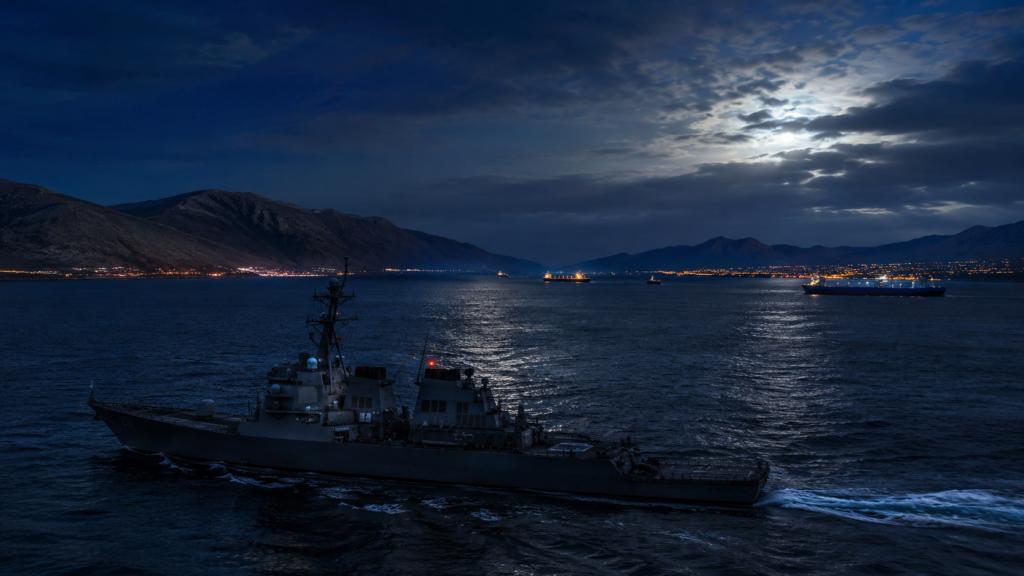
The report also described U.S. naval pressure and economic restrictions as part of Washington’s broader strategy toward Tehran.
The United States has increasingly relied on sanctions and financial restrictions when dealing with Iran. Such measures are designed to increase pressure on the Iranian government and limit its ability to finance military and regional activities.
The strategy also creates a difficult calculation for Tehran.
Iran must balance the economic consequences of continued confrontation against the political costs of making concessions to Washington.
For the Trump administration, economic pressure could potentially create conditions for negotiations without immediately moving toward a larger military conflict.
Israel Remains Central to the Regional Crisis
The situation between the United States and Iran cannot be separated from Israel and the wider Middle East conflict.
Israel remains Washington’s major regional ally, and the Iranian government has long opposed Israel while supporting armed groups that have fought against it.
According to the report, Trump praised Israel’s military capabilities and described the two countries as closely aligned in the region.
The United States has provided substantial military and diplomatic support to Israel for decades, while Iran has developed relationships with organizations including Hezbollah in Lebanon and Hamas in Gaza.
These relationships make the broader crisis complicated because developments involving Iran can quickly affect other parts of the Middle East.
Iran-Backed Groups Remain a Major Concern
Iran’s regional influence extends beyond its borders through relationships with armed groups in several countries.
The current crisis therefore involves much more than direct relations between Washington and Tehran.
Hezbollah in Lebanon, Hamas in Gaza and the Houthi movement in Yemen have all been discussed in relation to Iran’s regional strategy.
The United States and its allies have repeatedly expressed concern about attacks by Iran-aligned groups against military and commercial targets.
This creates a difficult challenge for diplomacy. Even if Washington and Tehran reach an understanding, separate conflicts involving regional groups could continue to create instability.
What Happens After the 60-Day Period?
The expiration of the reported ceasefire period raises several possibilities.
The first is a return to negotiations. If both Washington and Tehran believe that diplomacy offers a better alternative than continued escalation, the expiration of the deadline could eventually lead to a new framework.
The second possibility is increased economic pressure. Washington could introduce additional sanctions or other measures designed to weaken the Iranian government’s ability to finance its policies.
A third possibility is further military escalation. This would carry significant risks for the United States, Iran, Israel and countries throughout the Gulf region.
The Strait of Hormuz would be particularly important in such a scenario because any disruption could quickly affect international energy markets.
Global Oil Markets Watching the Situation Closely
The Middle East remains central to global energy security.
Any serious confrontation involving Iran and the Strait of Hormuz could cause uncertainty in oil markets. Even without a complete closure of the waterway, fears of disruption can influence crude oil prices and shipping costs.
Higher energy prices could then affect consumers and businesses around the world.
Countries in Asia and Europe that rely heavily on Middle Eastern energy supplies would be particularly attentive to developments involving Iran and regional shipping routes.
For this reason, the US-Iran confrontation is not simply a regional diplomatic dispute. Its economic consequences could extend across global markets.
Trump Says There Is No Fixed Timeline
Perhaps the most important message from the interview is Trump’s reported assertion that he is not operating under a strict timeline.
That statement reduces the immediate importance of the 60-day expiration date while keeping pressure on Tehran.
The approach also gives the administration flexibility. Washington can continue negotiations while simultaneously maintaining economic and military pressure.
For Iran, however, the lack of a fixed deadline creates uncertainty over how long the current pressure campaign could continue.
The United States would want verifiable guarantees regarding Iran’s nuclear capabilities and regional activities. Iran would likely seek sanctions relief, economic stability and assurances concerning its sovereignty.
Whether those objectives can be reconciled remains uncertain.
Middle East Crisis Enters a Critical Phase
The reported expiration of the 60-day U.S.-Iran ceasefire understanding marks another critical moment for the Middle East.
Trump’s comments indicate that Washington intends to maintain pressure on Tehran while keeping diplomatic communication channels open. At the same time, developments involving Israel, Gaza, Lebanon, Yemen, the Red Sea and the Strait of Hormuz demonstrate how interconnected the region’s conflicts have become.
The coming days could reveal whether the current pressure campaign produces renewed negotiations or pushes the region toward another escalation.
For now, governments, financial markets and international businesses are closely monitoring Tehran and Washington for signs of their next move.
Al Miraq will continue to follow developments surrounding the United States, Iran, Israel, the Strait of Hormuz and the wider Middle East crisis as more information becomes available.