By Al Miraq News Desk
Published: August 21, 2026
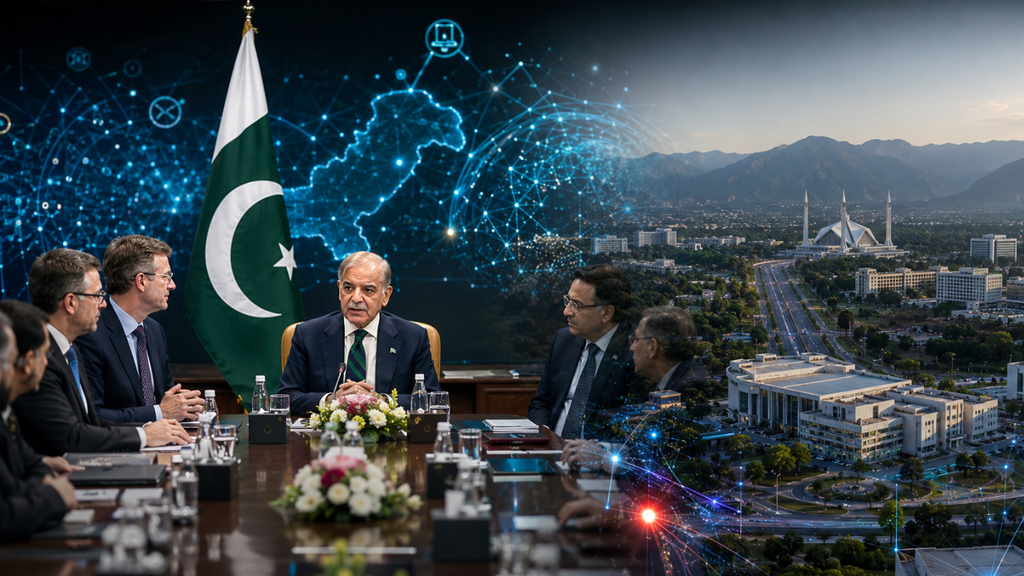
Pakistan witnessed a series of major political, economic, security and digital developments, with the government focusing on technology, national security, political dialogue and economic relief. Among the most significant developments was the signing of a Memorandum of Understanding (MoU) between the Government of Pakistan and Google aimed at promoting digital transformation and innovation.
At the same time, senior Pakistani military leadership held important meetings with political and community representatives from Balochistan, while discussions surrounding the security situation in the province remained a major part of the national discourse.
Another major development involved Pakistan Tehreek-e-Insaf (PTI) founder Imran Khan, who underwent a medical examination at the Pakistan Institute of Medical Sciences (PIMS) in Islamabad before being transferred back to Adiala Jail. The development triggered political debate, with PTI leaders demanding greater transparency regarding the former prime minister’s medical reports and treatment arrangements.
Political developments also remained active as Prime Minister Shehbaz Sharif once again invited the opposition to hold meaningful negotiations. PTI Chairman Barrister Gohar welcomed the offer but stressed that practical steps would be necessary for talks to produce results.
Meanwhile, tensions surrounding petroleum prices, the petroleum levy and Jamaat-e-Islami protests continued, while the government announced changes in fuel prices. Punjab Chief Minister Maryam Nawaz also highlighted the province’s growing digital governance infrastructure and disaster-response capabilities.
Why the Google-Pakistan Cooperation Matters
Pakistan has been attempting to increase its role in the global digital economy. The technology sector has the potential to create employment, increase exports and provide opportunities for freelancers, startups and software developers.
The latest MoU therefore represents more than a formal agreement. It reflects Pakistan’s growing emphasis on technology as part of its economic and administrative strategy.
Balochistan Security and Development Remain a National Priority
Security and development in Balochistan also remained at the center of national attention.
Field Marshal Syed Asim Munir held a meeting with important personalities and political representatives from Balochistan. During the interaction, the country’s military leadership emphasized the importance of peace, stability, investment and public welfare in the province.
Balochistan is Pakistan’s largest province by area and possesses significant natural resources and strategic importance. However, the province has also faced longstanding security, economic and political challenges.
Focus on Peace, Investment and Public Welfare
The message from the meeting emphasized that sustainable development requires a secure environment.
Investment, infrastructure development, education, employment and improved public services are among the issues that remain important for Balochistan’s long-term progress.
Pakistani authorities have repeatedly stated that hostile elements and militant organizations attempt to destabilize the province. Government and military officials have also accused foreign-backed proxies of contributing to instability.
Imran Khan Transferred Back to Adiala Jail After Medical Examination
Another major development involved former Prime Minister and PTI founder Imran Khan.
According to Information Minister Attaullah Tarar, Imran Khan underwent a medical examination at PIMS Hospital in Islamabad amid security concerns. Doctors from Shifa International Hospital were also reportedly present during the examination.
After the medical assessment, Imran Khan was transferred back to Adiala Jail in the early hours of the morning.
Government representatives stated that the medical examination found him to be in good health and said that medical facilities would continue to be provided whenever required.
The development, however, immediately generated political controversy.
The party maintained that the medical examination should comply fully with court directions and that any concerns regarding Imran Khan’s health should be addressed through a transparent medical process.
The government, on the other hand, maintained that the examination was conducted and that Imran Khan was medically fit.
Political Dispute Over Medical Arrangements
The disagreement over Imran Khan’s medical examination reflects the wider political tensions between the government and PTI.
Pakistan and Syria Discuss Regional Security
Another important diplomatic development involved a meeting between Field Marshal Syed Asim Munir and Syrian Foreign Minister Asaad Hassan Al-Shaibani.
The two sides reportedly discussed regional security and matters of mutual interest.
Pakistan and Syria have historically maintained friendly relations, and Islamabad has emphasized the importance of regional stability, sovereignty and cooperation.
During the meeting, the Pakistani military leadership highlighted the importance of cooperation between the two countries for regional and global peace.
The Syrian foreign minister reportedly appreciated the professional role of the Pakistan Army in promoting regional peace and stability.
Both sides also discussed expanding cooperation in defence and security-related fields.
Pakistan Reaffirms Support for Syria
Prime Minister Shehbaz Sharif also met the Syrian foreign minister and reaffirmed Pakistan’s support for Syria’s sovereignty, unity and regional stability.
The Pakistani prime minister reportedly expressed support for Syria’s efforts to strengthen its national institutions and territorial integrity.
The two sides also discussed the resumption of direct flights between Pakistan and Syria, which could make travel easier for visitors and strengthen people-to-people contacts.
Prime Minister Shehbaz Sharif also invited Syrian President Ahmad al-Sharaa to visit Pakistan.
The diplomatic activity demonstrates Islamabad’s continued interest in strengthening relations with Syria while maintaining a broader focus on regional peace.
Pakistan Remembers Victims of Terrorism
Pakistan also observed a day of remembrance for victims of terrorism.
President Asif Ali Zardari paid tribute to those who lost their lives in terrorist attacks and expressed solidarity with their families.
Pakistan has experienced significant losses in its long-running fight against terrorism. Security personnel and civilians have both been affected by terrorist attacks over the years.
The government maintains that Pakistan will continue its efforts against terrorism and will not allow militant groups to undermine national stability.
Interior Minister Mohsin Naqvi also emphasized Pakistan’s commitment to fighting terrorism and said the country would continue standing firmly against extremist violence.
Punjab Chief Minister Maryam Nawaz stated that terrorism has no religion, nationality or language and called for efforts to defeat narratives of hatred and promote peace.
Prime Minister Shehbaz Sharif Invites Opposition for Talks
Political negotiations emerged as another major issue in Pakistan.
Prime Minister Shehbaz Sharif once again invited opposition parties to participate in meaningful negotiations during a meeting of the federal cabinet.
The prime minister reportedly said that the government was prepared for purposeful dialogue and that political disputes should be resolved through negotiations.
He emphasized that dialogue requires participation from both sides and indicated that the opposition would ultimately have to decide when it was ready to return to the negotiating table.
The government’s latest offer was welcomed cautiously by PTI leadership.
PTI Welcomes Dialogue Offer
PTI Chairman Barrister Gohar described the prime minister’s invitation as a positive development but stressed that the offer should not remain limited to verbal statements.
According to the PTI leadership, practical measures would be required to create an environment for meaningful negotiations.
The opposition has previously complained that government offers for talks did not lead to substantial political progress.
Barrister Gohar said that Pakistan needs political stability and that political issues should ultimately have political solutions.
He also emphasized the importance of strengthening democracy and national institutions through dialogue.
PPP Raises Concerns Over Imran Khan Case and Coalition Issues
Pakistan Peoples Party Chairman Bilawal Bhutto Zardari also expressed concerns during proceedings in the National Assembly.
Bilawal reportedly urged the prime minister to ensure that his team provides accurate and complete information on important political matters.
PPP leader Sharjeel Memon also criticized the federal government’s handling of the issue involving Imran Khan’s medical treatment.
According to the PPP position, Imran Khan should have been transferred to a hospital and the government’s decision to challenge a court order was described as a serious mistake.
These comments highlight the complicated relationship between Pakistan’s coalition partners, with the PPP continuing to raise concerns over several government decisions.
Opposition Parties Move Toward Greater Coordination
Opposition Leader Mahmood Achakzai and Jamiat Ulema-e-Islam leader Maulana Fazlur Rehman also held an important meeting.
Following the meeting, the JUI-F leadership indicated that consultations regarding the formation of a united opposition would continue.
Maulana Fazlur Rehman described the development as a positive beginning and emphasized the need for parliament to play a stronger role in resolving national issues.
He also indicated that opposition parties should work toward creating an environment for an All Parties Conference.
Regarding the PPP, Fazlur Rehman pointed out that the party is part of the government and suggested that continued disagreements or perceived failures to honor commitments could make political cooperation more difficult.
PPP Raises Complaints With National Assembly Speaker
Political tensions within the ruling coalition also surfaced during a meeting between PPP representatives and National Assembly Speaker Ayaz Sadiq.
Sources cited in the reports said PPP representatives complained about being ignored in parliamentary and political matters.
The party also reportedly raised concerns regarding the Azad Jammu and Kashmir elections and called for investigations into allegations of irregularities.
Government representatives reportedly responded that investigations could be conducted if evidence regarding electoral irregularities was provided.
Finance Minister Ishaq Dar also assured coalition representatives regarding concerns related to legislation.
Speaker Ayaz Sadiq said he wanted both coalition parties to resolve their differences and assured them that he would continue playing his role.
Parliament Approves Defence-Related Amendments
The National Assembly and Senate also approved legislation concerning defence-related laws.
The bills reportedly included amendments to the Defence Forces Act 2026 and the National Command Authority Act 2010.
Defence Minister Khawaja Asif presented the bills.
The legislation comes amid a broader focus on national security and institutional coordination in Pakistan.
Petroleum Prices and Public Pressure
Fuel prices remained another major concern for the public.
Pakistan’s petroleum pricing has become a politically sensitive issue because changes in fuel prices directly affect transportation costs, electricity generation, businesses and household expenses.
Jamaat-e-Islami leader Hafiz Naeem ur Rehman criticized the petroleum levy during a public address in Lahore.
He argued that the government should reduce fuel prices and remove or significantly lower the petroleum levy.
Jamaat-e-Islami has been organizing protests in Lahore, Karachi and Peshawar over fuel prices and the petroleum levy.
The party has warned that it is prepared to continue its campaign if the government does not take practical steps to reduce the burden on consumers.
New Petrol and Diesel Prices
The government also announced changes in petroleum prices.
According to the figures cited in the news report, petrol was increased by 27 paisa per litre, taking the new price to Rs337.78 per litre.
The price of high-speed diesel was increased by Rs1.64 per litre, taking it to Rs364.70 per litre.
Fuel prices remain closely watched by Pakistani consumers because even small increases can have wider effects on transportation and the prices of essential goods.
Punjab Expands Digital Governance
Punjab Chief Minister Maryam Nawaz also highlighted the province’s digital transformation initiatives.
Speaking in Lahore, she said Punjab was not only adopting technology but also using digital systems to improve governance.
According to her remarks, government ministries, departments, districts, divisions and police formations are increasingly being integrated into a digital ecosystem.
The objective is to make government operations more automated, accessible and efficient.
Digital Punjab and Technology-Based Governance
Punjab has increasingly focused on digital public services and technology-driven administration.
Digital systems can potentially reduce paperwork, improve monitoring and allow authorities to respond more quickly to public complaints and emergencies.
The provincial government has also promoted technology-based approaches to public safety, administration and service delivery.
Maryam Nawaz emphasized that the government must remain focused on ensuring public safety and effective administration.
Punjab’s Response to Flooding and Heavy Rain
The Punjab chief minister also discussed the province’s response to heavy rainfall and flooding.
She said that during emergencies, ministers and government officials remain involved in monitoring the situation until affected areas are stabilized.
According to her remarks, the provincial administration has focused on removing accumulated water and ensuring that government officials remain present during difficult conditions.
She also compared Punjab’s response with other regions and highlighted the importance of modern infrastructure and effective drainage systems.
The increasing frequency of extreme weather events has made flood management and urban drainage important policy challenges for provincial governments.
Pakistan Faces Multiple Challenges but Digital Transformation Offers Opportunities
The latest developments demonstrate the wide range of challenges facing Pakistan.
On one side, the country is dealing with terrorism, political disagreements, fuel prices and economic pressures. On the other, the government is attempting to expand digital transformation, strengthen international relations and improve public administration.
The agreement with Google could become particularly important if it translates into practical programs for digital skills, technology education and innovation.
Similarly, political dialogue between the government and opposition could help reduce tensions if both sides are willing to move beyond statements and focus on practical negotiations.
The situation surrounding Imran Khan’s medical examination also demonstrates the importance of transparency and clear communication in politically sensitive matters.
What These Developments Mean for Pakistan
Taken together, these developments show that Pakistan is navigating several major challenges simultaneously.
The country’s digital future is becoming increasingly important, with international technology cooperation potentially providing new opportunities for young people and businesses.
At the same time, peace and stability in Balochistan remain essential for investment and economic development.
Political dialogue is another key requirement for stability. Government and opposition parties continue to disagree over major issues, but calls for negotiations indicate that there remains some space for political engagement.
Pakistan’s security situation also remains a central national priority, while the government continues to emphasize its commitment to combating terrorism.
Meanwhile, ordinary citizens remain focused on economic concerns, particularly fuel prices and the cost of living.
Conclusion
Pakistan’s latest political and national developments reflect a country undergoing significant change while dealing with serious economic, political and security challenges.
The Pakistan-Google MoU marks an important step toward strengthening the country’s digital ecosystem and promoting technology-driven development. Developments in Balochistan underline the continued importance of peace, stability and investment, while the Imran Khan medical examination has once again placed political tensions and questions about transparency in the national spotlight.
At the political level, Prime Minister Shehbaz Sharif’s renewed invitation for talks could provide an opportunity for dialogue between the government and opposition if both sides take practical steps toward negotiations.
Meanwhile, disputes over fuel prices, petroleum levies, coalition relations and parliamentary legislation demonstrate that Pakistan’s political environment remains highly active.
For Pakistan to move forward, sustainable economic development, effective governance, technological innovation, political stability and improved security will all remain crucial.
As the country continues to expand its digital capabilities and strengthen international partnerships, the coming months will be important in determining whether these initiatives translate into tangible benefits for ordinary Pakistanis.
Al Miraq — Beyond the Headlines.