By Al Miraq News Desk
Published: August 25, 2026
The United States has intensified economic pressure on Iran with a new package of sanctions that Washington describes as one of the toughest efforts yet to restrict Tehran’s financial lifelines. Iranian officials, meanwhile, have signaled that they are prepared to resist the pressure rather than accept what they characterize as economic coercion.
The latest developments come amid broader tensions surrounding Iran, the United States and the security of vital maritime routes. The situation also has implications for countries across the Middle East and beyond, including Pakistan and European states whose energy, trade and security interests can be affected by instability in the region.
The supplied material reports that Washington has launched what it calls Operation Economic Outcast, alongside new sanctions targeting Iran and individuals connected to its security establishment. Tehran has responded by emphasizing economic resilience and international partnerships, while Iranian authorities have also taken action against oil tankers accused of violating its rules in the Strait of Hormuz.
The claims and statements surrounding the confrontation highlight a wider question: whether increased economic pressure can force Iran toward negotiations or instead produce another cycle of escalation.
US Sanctions on Iran Enter a More Aggressive Phase
The latest US sanctions on Iran represent a major escalation in Washington’s economic campaign against Tehran, according to the material reviewed for this report.
US Treasury Secretary Scott Bessent is reported to have described the measures as among the toughest sanctions imposed on Iran. The stated objective is to restrict financial channels that provide economic support to the Iranian government and to put additional pressure on entities and countries that continue cooperating with Tehran.
The reported measures include the cancellation of certain licenses that had allowed Iran-related financial transactions to continue under limited exemptions.
Washington’s broader strategy appears to be based on the assumption that restricting access to international finance, energy revenues and commercial networks can significantly weaken Iran’s ability to sustain its economy and support its strategic activities.
However, sanctions alone do not automatically produce political change. Iran has faced extensive international restrictions for years and has developed mechanisms for maintaining trade, accessing alternative markets and working through non-Western economic partners.
Washington Warns Iran’s Supporters
The reported US measures are also intended to create risks for third parties that provide economic assistance to Iran.
This is significant because Iran’s economic relationships extend beyond the United States and its traditional Western partners. Tehran maintains commercial and strategic relationships with countries that have their own interests in maintaining trade with Iran.
If secondary sanctions or other financial restrictions are applied aggressively, international companies and governments could face difficult choices between maintaining commercial relationships with Iran and protecting their access to the US financial system.
That dynamic has previously made American sanctions a powerful tool of economic diplomacy.
At the same time, it can create tensions between Washington and countries that oppose unilateral sanctions or believe that diplomatic and commercial engagement should remain possible.
Tehran Says It Is Prepared to Resist
Iran has rejected the idea that American economic pressure will force it to surrender its strategic interests.
The material reports that Iranian Finance Minister Ali Madani-Zadeh said Tehran had made the necessary preparations to deal with the effects of American sanctions.
Iran’s stated position is that it will rely on its economy and international relationships rather than submit to pressure.
That response reflects Tehran’s longstanding approach to sanctions. Iranian authorities have repeatedly sought to reduce dependence on Western financial systems while strengthening commercial relationships with countries willing to continue economic engagement.
Whether those efforts can fully compensate for restrictions on Iranian oil revenues, banking access and international trade remains uncertain.
The economic consequences for ordinary Iranians are also an important part of the picture. Sanctions can affect government finances, imports, currency stability, investment and the availability of goods even when their formal targets are government institutions or security organizations.
Iran Takes Action Against Oil Tankers
The confrontation is not limited to financial measures.
The supplied material says Iranian authorities blacklisted 45 oil tankers over alleged violations of regulations governing passage through the Strait of Hormuz.
Iran has reportedly warned that vessels violating its rules could face similar action in the future.
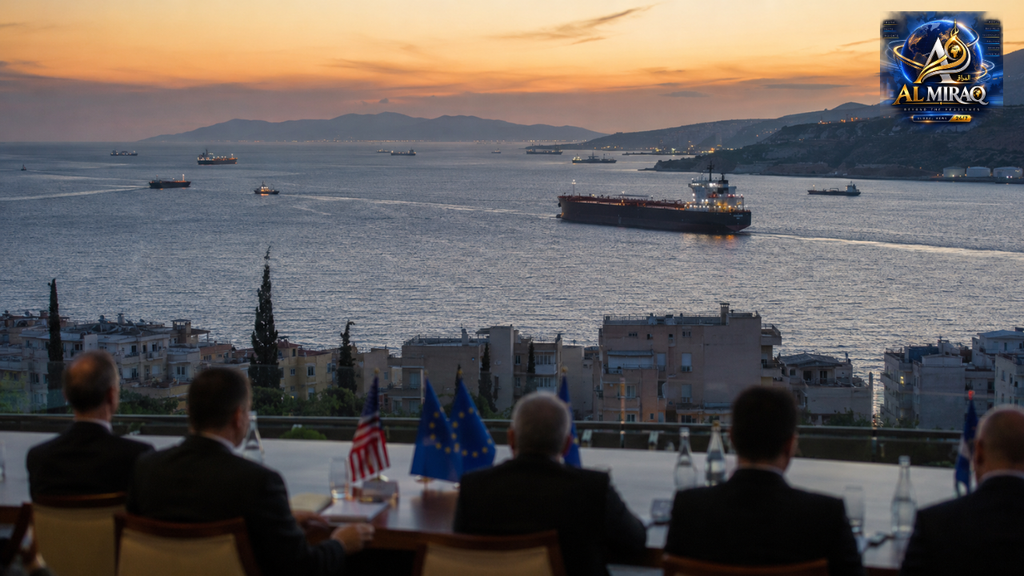
The Strait of Hormuz is particularly important because it is one of the world’s most strategically significant maritime chokepoints. Large quantities of oil and other energy products move through the waterway, making any disruption potentially significant for global markets.
Even without a complete closure of the strait, uncertainty surrounding maritime security can influence shipping costs, insurance premiums and energy prices.
For this reason, developments involving Iranian restrictions on commercial vessels are closely connected to the wider economic confrontation between Tehran and Washington.
Why the Strait of Hormuz Matters
The strategic importance of the Strait of Hormuz extends far beyond Iran and the United States.
Asian economies are heavily dependent on energy transported through the region, while European markets can also be affected by changes in global energy prices and shipping conditions.
A major disruption could therefore have consequences well beyond the Middle East.
At present, the supplied material does not establish that a complete closure of the Strait of Hormuz has occurred. Any claims about future disruption should therefore be treated as potential scenarios rather than established developments.
Trump and Iranian Parliament Speaker Exchange Sharp Rhetoric
Political rhetoric between Washington and Tehran has also intensified.
The material describes a public exchange involving US President Donald Trump and Iranian Parliament Speaker Mohammad Bagher Ghalibaf.
Ghalibaf reportedly warned about food shortages and argued that military strength alone could not compensate for serious economic hardship. In response to Trump’s political slogan “Make America Great Again,” he reportedly used a variation referring to hunger in the United States.
Ghalibaf also made a claim about millions of Americans experiencing food insecurity.
Such statements should be understood as political rhetoric rather than independently verified evidence within the supplied material.
The exchange nevertheless illustrates the increasingly confrontational tone surrounding the US-Iran dispute.
Public statements by senior officials can influence diplomatic conditions, particularly when governments are simultaneously negotiating over sanctions, nuclear issues, regional security and military deterrence.
US Targets Senior Iranian Security Officials
The American campaign is also reported to include financial incentives for information about senior figures connected with Iran’s Islamic Revolutionary Guard Corps.
The material says the US Treasury announced rewards of up to $10 million for information concerning five senior officials.
Among the individuals named are Revolutionary Guards commander Ahmad Vahidi, Khatam al-Anbiya Central Headquarters commander Ali Abdollahi and cyber-related commander Hamid Reza Lashgarian.
Because these are specific claims concerning US government actions and named individuals, the information should be understood as reported in the supplied material rather than independently verified here.
The targeting of senior security officials represents a different dimension of pressure from broad economic sanctions. Instead of focusing only on institutions or financial networks, such measures can directly increase pressure on individuals associated with Iran’s military and security establishment.
Pakistan’s Position Is Also Significant
The developments are particularly relevant for Pakistan because Islamabad maintains geographic proximity and diplomatic relations with Tehran while also maintaining a strategic relationship with Washington.
The supplied material separately reports that Iranian authorities described Pakistani Field Marshal Syed Asim Munir’s visit to Iran as highly productive.
Iran’s presidential office reportedly said the visit produced significant diplomatic achievements and that the results would begin becoming visible.
The report says Munir held meetings with Iranian leadership in Tehran.
The development is notable because Pakistan has strong reasons to maintain stable relations with Iran. The two countries share a border, and developments inside Iran can directly affect Pakistan’s regional security and economic environment.
At the same time, Pakistan has extensive relations with the United States and must navigate its relationship with Washington.
Pakistan and the United States Discuss Cooperation
The supplied material also reports a meeting between Pakistan’s Interior Minister Mohsin Naqvi and US official Natalie Baker.
The discussions reportedly covered cooperation in several areas, including efforts against drug-related threats and human smuggling.
The material further says Baker praised the diplomatic role played by Field Marshal Munir and emphasized that cooperation between Pakistan and Iran should not be obstructed or weakened.
If accurately represented, such statements would underscore the complexity of Pakistan’s position as tensions between Washington and Tehran increase.
Islamabad has an interest in avoiding instability along its western border while maintaining constructive relationships with both major international partners.
European Security Could Face Wider Risks
The growing confrontation between Iran and the United States also has implications for Europe.
A significant deterioration in maritime security around the Strait of Hormuz could increase shipping and energy costs. European governments would also need to assess potential consequences for supply chains and broader economic stability.
There is an additional security dimension.
Those countries should therefore not be presented as direct targets or participants in the current confrontation without independent evidence.
NATO and the Broader Security Environment
The potential implications for NATO would depend heavily on how the situation develops.
Economic sanctions by themselves do not trigger NATO’s collective-defense mechanism.
At present, the supplied material does not establish such an attack.
The principal concern is therefore the possibility of wider instability.
The possibility of escalation is one reason diplomatic communication remains important.
Saudi Arabia and France Push for Diplomacy
The material also highlights diplomatic activity elsewhere in the region.
Saudi Crown Prince Mohammed bin Salman reportedly visited France and held meetings with French leaders. The two sides emphasized negotiations as a means of preventing further escalation and promoting regional stability.
The reported statement also called on Iran to resume cooperation with the International Atomic Energy Agency.
Saudi Arabia and France reportedly condemned attacks on commercial vessels in the Strait of Hormuz and signed multiple agreements.
These developments illustrate that regional powers are pursuing both diplomatic and strategic options as tensions surrounding Iran continue.
For Gulf states, maritime security is directly connected to economic stability. For France and other European countries, the issue has implications for energy security, trade and regional diplomacy.
What Remains Unclear
Despite the increasingly forceful rhetoric, several important questions remain unanswered.
First, it is unclear how effective the latest US sanctions will be in changing Iran’s strategic calculations. Iran has considerable experience operating under sanctions and has developed alternative economic channels.
Second, the future of maritime security around the Strait of Hormuz remains uncertain.
Third, the political dispute between Washington and Tehran could move in either direction. Economic pressure can create incentives for negotiations, but it can also encourage governments to adopt more confrontational positions.
Finally, the extent of European involvement remains unclear.
The Wider Geopolitical Stakes
The latest US sanctions on Iran are part of a much broader geopolitical struggle.
The situation therefore cannot be viewed solely as a dispute between two governments. Its consequences can spread through financial markets, shipping routes, energy prices and diplomatic relationships.
Conclusion
The latest US sanctions on Iran mark another significant escalation in Washington’s economic campaign against Tehran, while Iran is signaling that it intends to withstand the pressure rather than capitulate.
The reported restrictions on financial channels, pressure on countries cooperating with Iran and measures targeting senior Iranian security officials demonstrate the breadth of the American strategy. Tehran’s response, meanwhile, emphasizes economic resilience, international partnerships and resistance to US pressure.
What is clear is that the confrontation is becoming increasingly multidimensional, combining sanctions, political rhetoric, maritime restrictions and diplomatic maneuvering. The next phase will depend heavily on whether Washington and Tehran can reopen meaningful channels for negotiation before economic and security pressures produce a broader regional crisis.
Al Miraq — Beyond the Headlines.