By Al Miraq News Desk
Published: August 25, 2026
Pakistan has intensified its diplomatic efforts to reduce tensions surrounding the Iran-U.S. confrontation, with Field Marshal Syed Asim Munir holding a series of meetings with Iran’s senior leadership in Tehran. The discussions focused on reducing further escalation, restoring dialogue and exploring diplomatic avenues to address the wider regional crisis. At the same time, Washington has announced additional economic measures against Tehran, creating a sharp contrast between diplomatic efforts and mounting economic pressure.
The developments come as concerns grow over the possibility that continued confrontation between Iran and the United States could produce wider instability across the Middle East and affect international trade, maritime security and the broader European security environment.
Pakistan’s latest diplomatic engagement therefore carries significance beyond its bilateral relationship with Iran. Islamabad appears to be positioning itself as a regional actor seeking a negotiated reduction in tensions while avoiding further military escalation.
Asim Munir Meets Iran’s Senior Leadership in Tehran
Field Marshal Syed Asim Munir held meetings with Iranian President Masoud Pezeshkian and several other senior Iranian officials during his engagement in Tehran.
The discussions reportedly included Iran’s Supreme Leader’s representative Mohsen Rezaei, Iranian Parliament Speaker Mohammad Bagher Ghalibaf, Foreign Minister Abbas Araghchi and Interior Minister Eskandar Momeni.
The central theme of the meetings was the need to prevent further escalation and explore ways of ending the confrontation through dialogue.
Issues surrounding the Strait of Hormuz were also discussed. The waterway is strategically important to global energy and maritime trade, meaning any prolonged disruption could have consequences extending well beyond the countries directly involved.
The talks also addressed regional peace and the possibility of resolving disputes through negotiations rather than continued confrontation.
Iranian leaders reportedly welcomed Pakistan’s efforts to reduce tensions and praised what they described as Islamabad’s constructive approach toward finding a peaceful solution.
Pakistan Pushes for Dialogue Over Escalation
Pakistan’s diplomatic message appears to be centered on de-escalation.
Federal Interior Minister Mohsin Naqvi described the discussions as focused on the Iran-U.S. confrontation, reducing tensions in the Middle East and identifying a possible path forward.
The talks also reportedly considered measures that could help restore communication between the sides.
For Islamabad, the diplomatic challenge is significant. Pakistan shares a long border with Iran and has direct security, economic and political interests in developments inside the region.
Any major deterioration in Iran’s relations with the United States could therefore create complications for Pakistan, particularly in areas involving border security, trade, energy and regional stability.
Pakistan also has an interest in preventing a wider conflict from spreading across the region.
The meetings in Tehran indicate that Islamabad is emphasizing diplomacy at a moment when other developments are moving in the opposite direction.
U.S. Announces New Pressure Campaign Against Iran
While Pakistan was pursuing diplomatic engagement, Washington announced a new round of sanctions against Iran.
The U.S. Treasury Secretary, Scott Bessent, was quoted in the supplied material as describing the new restrictions as among the toughest measures imposed on Iran.
The stated objective of the campaign is to further restrict Iran’s access to financial resources and target entities and countries that provide economic support to Tehran.
Some previously issued licenses connected to financial transactions were also reportedly revoked.
The U.S. position is that increased economic pressure could force Iran to change its approach and return to negotiations.
Iran, however, has rejected the idea that economic pressure will force it to surrender its position.
That creates a fundamental divide between the two sides: Washington is relying heavily on economic leverage, while Tehran says it is prepared to withstand the pressure and use its economic capabilities and international relationships to respond.
Iran Says It Is Prepared to Resist Sanctions
Iranian officials have indicated that the country has prepared for the consequences of additional American measures.
Iran’s economic authorities have said Tehran will not simply accept U.S. pressure and will instead rely on its domestic economic capacity and international relationships.
The confrontation is therefore increasingly developing on multiple fronts.
It is not limited to diplomatic statements or military threats. Financial restrictions, shipping, energy markets and international trade are becoming important components of the broader dispute.
The situation involving the Strait of Hormuz is particularly significant.
Iran has reportedly taken action against 45 oil tankers accused of violating its rules for passage through the waterway. Iranian authorities indicated that similar measures could be taken against vessels that violate established regulations in the future.
Such developments could increase uncertainty for commercial shipping.
Any prolonged disruption or confrontation around the Strait of Hormuz would be closely watched by international energy markets because of the waterway’s importance to global oil transportation.
Why the Strait of Hormuz Matters
The Strait of Hormuz is one of the world’s most strategically important maritime routes.
Its geographical position connects the Persian Gulf with the Gulf of Oman and the wider Arabian Sea. Large volumes of energy supplies pass through the area, making its security a major concern for governments and international markets.
This is why discussions about reopening or maintaining access through the waterway have implications far beyond Iran and its immediate neighbors.
For Pakistan, the issue has particular relevance because of its geographical proximity to the Persian Gulf and its dependence on stable regional trade and energy supplies.
For Europe and other international economies, uncertainty around maritime routes could create additional pressure on energy prices, shipping costs and supply chains.
The diplomatic emphasis on preventing escalation therefore has an important economic dimension as well.
Washington and Tehran Continue Verbal Confrontation
The confrontation has also spilled into political rhetoric.
U.S. President Donald Trump and Iranian Parliament Speaker Mohammad Bagher Ghalibaf have exchanged sharp messages through social media.
The dispute reportedly intensified after Trump shared a post from Ghalibaf concerning food shortages and economic difficulties in Iran.
Ghalibaf responded by modifying Trump’s well-known political slogan in a criticism of conditions in the United States, while also pointing to food insecurity among Americans.
The exchange illustrates how the confrontation is increasingly being fought through public messaging as well as economic and diplomatic measures.
However, political rhetoric does not necessarily indicate that military action is imminent.
The more important question is whether the two governments can eventually move from public confrontation toward a framework for negotiations.
U.S. Targets Senior Iranian Officials
The American pressure campaign has also included measures targeting senior Iranian officials.
The U.S. Treasury reportedly announced rewards for information concerning several senior members of Iran’s Islamic Revolutionary Guard Corps and related security structures.
The stated purpose of such measures is to increase pressure on individuals associated with Iran’s security establishment.
From Washington’s perspective, targeted sanctions and financial restrictions are intended to increase the cost of Iran’s policies.
From Tehran’s perspective, however, such measures are part of a broader campaign of economic and political pressure against the Iranian state.
The competing approaches make diplomatic engagement more difficult, but they also increase the importance of intermediaries and regional countries capable of maintaining communication channels.
China Calls for Diplomacy
China has also criticized the use of economic pressure as a method for resolving the confrontation.
According to the material, China’s Foreign Ministry has argued that disputes involving Iran should be addressed through negotiations rather than economic coercion.
Beijing has urged the parties to exercise restraint and prioritize diplomatic channels to reduce regional tensions.
China’s position adds another dimension to the international response.
The dispute is therefore no longer simply a bilateral issue involving Washington and Tehran. Regional powers and major international states are closely monitoring the situation because of its implications for energy security, trade and international diplomacy.
For Pakistan, China’s position is also significant because Islamabad maintains close relations with Beijing while simultaneously seeking constructive ties with Tehran and avoiding unnecessary confrontation with Washington.
Potential Implications for Europe
The immediate diplomatic activity is centered on Iran, Pakistan and the United States, but the consequences could extend into Europe.
A significant escalation in the Middle East could affect European countries through energy markets, maritime transportation, migration pressures and broader security concerns.
European governments would also have to consider the consequences of any deterioration in maritime security around the Persian Gulf and the wider Middle East.
The possibility of disruption to energy supplies is particularly important.
Europe has spent years attempting to strengthen energy security and diversify supply sources. A major regional crisis could nevertheless create additional volatility in global markets.
European security agencies would also monitor the possibility of increased geopolitical competition, cyber activity or instability connected to a wider regional confrontation.
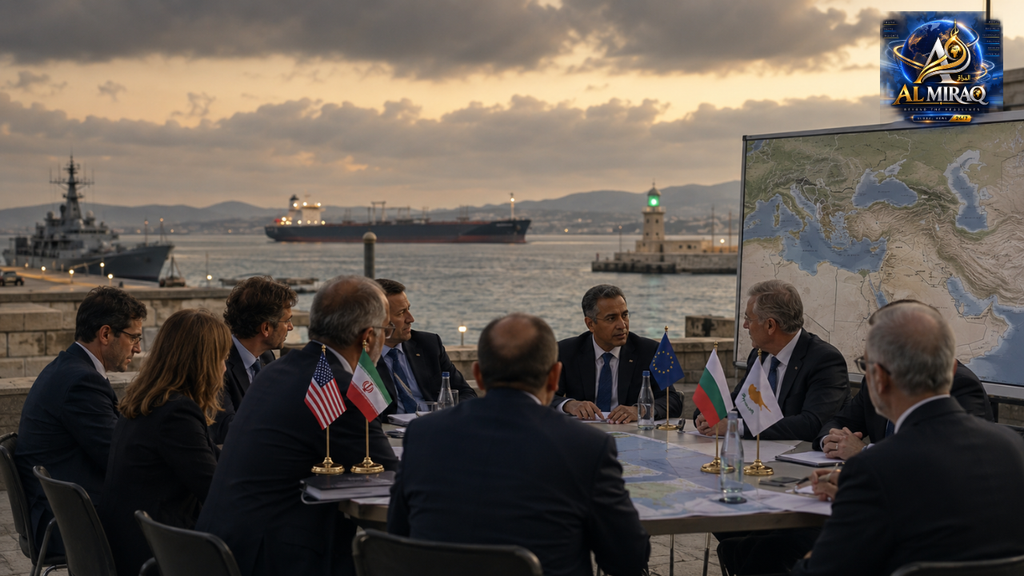
However, the supplied material does not establish that Bulgaria or Cyprus are currently facing a specific military threat or that either country is directly involved in the reported developments.
Their relevance is primarily geographical and strategic when considering the wider Mediterranean and European security environment. Any discussion of these countries should therefore be understood as broader regional context rather than evidence of a specific operation or imminent threat.
Bulgaria and Cyprus in the Wider Security Picture
Bulgaria occupies an important position on Europe’s southeastern flank, while Cyprus sits in the eastern Mediterranean close to the Middle East.
Both locations can become strategically relevant when tensions in the Middle East have consequences for Mediterranean security, maritime movement and European military planning.
However, there is no basis in the supplied material to claim that Bulgaria or Cyprus have been targeted by Iran or that a specific Iranian military operation against either country is underway.
That distinction is important.
As tensions rise between major powers, speculation can spread rapidly through social media and online commentary. Responsible reporting requires separating established developments from possible future scenarios.
What Remains Unclear
Despite the diplomatic activity in Tehran, major questions remain unresolved.
The future of maritime security around the Strait of Hormuz is another major uncertainty.
If tensions remain high, commercial shipping companies may face increased risks and higher operating costs. If diplomatic channels succeed, however, the immediate pressure on maritime routes could decline.
There is also uncertainty about the broader regional consequences.
Pakistan’s Diplomatic Role
Pakistan’s engagement is significant because Islamabad has direct relationships with the key regional actors involved in the crisis.
The meetings between Asim Munir and Iran’s leadership demonstrate that Pakistan is actively communicating with Tehran at a sensitive moment.
For Islamabad, successful diplomacy could provide several benefits.
But mediation also carries risks.
The Road Ahead
The developments in Tehran highlight two competing approaches to the Iran crisis.
Pakistan is emphasizing dialogue and de-escalation, while the United States is increasing economic pressure on Tehran. Iran, meanwhile, says it is prepared to withstand sanctions and protect its interests through domestic capabilities and international relationships.
China is also calling for negotiations rather than further economic pressure.
Whether these approaches can eventually converge remains uncertain.
Conclusion
The most significant issue now is whether diplomatic engagement can produce measurable de-escalation.
The situation remains fluid, and many of the more serious consequences being discussed internationally are possibilities rather than established developments.
Al Miraq — Beyond the Headlines.