By Al Miraq News Desk
Published: August 26, 2026
Pakistan’s military chief, Field Marshal Asim Munir, held high-level meetings with Iranian President Masoud Pezeshkian and other senior Iranian leaders during a visit to Tehran, with discussions reportedly focused on reducing tensions between Iran and the United States, finding a path toward de-escalation and addressing the future of the Strait of Hormuz.
The visit has placed Pakistan’s diplomatic efforts at the center of a rapidly evolving regional security environment. Pakistani officials described the discussions as positive and productive, while Iranian authorities also indicated that the meetings provided an opportunity to present Tehran’s position and concerns directly.
The talks come against a backdrop of heightened tensions involving Iran and the United States, with the security of vital waterways and the wider stability of the Middle East remaining major international concerns.
Pakistan has repeatedly sought to position itself as a constructive regional actor capable of maintaining communication with competing sides. The latest diplomatic engagement suggests Islamabad is seeking to use its relationship with Tehran to support dialogue rather than further escalation.
Asim Munir Iran Visit Focuses on De-Escalation
The central focus of the Asim Munir Iran visit was reportedly the possibility of reducing tensions between Iran and the United States.
During his meetings in Tehran, Munir discussed measures aimed at preventing further escalation and creating conditions for dialogue. The talks also reportedly addressed the reopening of the Strait of Hormuz, one of the world’s most strategically important maritime routes.
The Strait of Hormuz is particularly significant because it connects the Persian Gulf with the Gulf of Oman and the Arabian Sea. Any prolonged disruption in the waterway could have consequences far beyond the Middle East, potentially affecting energy markets, shipping routes and global economic stability.
For Pakistan, developments around the Strait are especially important because of its geographic proximity to the Gulf region and its longstanding political, economic and security relationships with Middle Eastern countries.
The Pakistani side has presented the Tehran engagement as part of efforts to encourage stability and prevent a broader confrontation.
Iranian Leadership Presents Tehran’s Position
Iranian President Masoud Pezeshkian reportedly briefed Field Marshal Asim Munir on Tehran’s position and concerns during their meeting.
The Iranian side described the engagement as positive and productive. The meetings provided an opportunity for Tehran to communicate its concerns directly to a senior Pakistani official at a time when relations between Iran and the United States remain highly sensitive.
The details of any specific commitments reached during the meetings have not been fully established in the supplied information.
That distinction is important. Diplomatic discussions can create channels for future negotiations without immediately producing a formal agreement or a permanent settlement.
For now, the available information points toward continued engagement and an attempt to explore diplomatic options.
Pakistan Seeks a Role in Easing U.S.-Iran Tensions
Pakistan has an unusual position in the regional diplomatic landscape. Islamabad maintains close ties with Iran while also having longstanding strategic relations with the United States and important economic relationships with Gulf countries.
That combination gives Pakistan an incentive to support dialogue and avoid a major regional escalation.
The Pakistani government described Munir’s Tehran visit as successful and said the results of the engagement would become visible in the near future. Pakistani officials also highlighted what they characterized as important diplomatic progress.
The broader objective appears to be keeping communication channels open at a time when diplomatic space can quickly narrow during periods of military or political confrontation.
Pakistan’s role should not, however, automatically be interpreted as formal mediation unless the parties themselves confirm such a mandate. The available information supports the conclusion that Islamabad is actively encouraging dialogue, but the precise scope of its diplomatic role remains subject to further developments.
Why the Strait of Hormuz Matters
One of the most important issues discussed during the Tehran meetings was reportedly the Strait of Hormuz.
The waterway is a critical corridor for international energy transportation. Its security has implications for countries across Asia, Europe and North America because disruptions can affect shipping costs, energy supplies and global markets.
Any attempt to reopen or secure the waterway would therefore carry significance beyond Iran and its immediate neighbors.
For Pakistan, the issue is also connected to national economic interests. Pakistan relies heavily on imported energy and maintains extensive commercial relationships with Gulf states. A prolonged regional crisis could place additional pressure on energy prices, transportation costs and the broader economy.
The Strait’s importance also means that developments there are closely watched by international governments and security organizations.
A Wider International Security Issue
The security of the Strait of Hormuz is not simply a Middle Eastern issue.
European economies are exposed to fluctuations in global energy markets, while NATO members have broader interests in protecting international shipping and maintaining freedom of navigation.
Any serious disruption could therefore generate pressure for international diplomatic initiatives as well as security responses.
This makes Pakistan’s diplomatic engagement potentially relevant to a much wider audience. If Islamabad can contribute to reducing tensions, even indirectly, the effects could extend beyond South Asia.
At the same time, expectations should remain measured because the underlying disagreements between Iran and the United States are much broader than any single diplomatic visit.
U.S. Position Adds to Regional Pressure
The supplied material also points to continued confrontation between Washington and Tehran, including statements from the U.S. side concerning mines and vessels allegedly involved in laying mines in strategic waterways.
The U.S. president was reported as claiming that mines had been removed and warning that Iranian ships or boats involved in laying new mines could be targeted.
Such statements illustrate the security dimension of the current tensions. They also demonstrate how quickly a diplomatic dispute can develop into a broader maritime security crisis.
The reported U.S. position suggests that Washington is closely monitoring developments around strategic waterways and is prepared to take a hard line against activities it considers threats to navigation.
Iran, meanwhile, has rejected the idea that the United States can dictate Tehran’s relationships with other countries.
Iranian parliamentary leadership was reported as saying that the United States is no longer in a position to limit Iran’s relations with other nations. Iranian officials also emphasized their readiness to withstand economic pressure and sanctions.
These competing positions underline the difficulty of reaching a durable settlement.
Iran Faces Economic and Strategic Pressure
Iran’s position is complicated by economic pressure, sanctions and the broader consequences of confrontation.
The supplied material includes claims that Iran is facing a major humanitarian and economic crisis and difficulties in financing its military. Such claims should be treated carefully unless independently confirmed by authoritative sources.
What is clear is that sanctions have been a major component of the broader U.S.-Iran confrontation for years, while Iran has repeatedly sought to strengthen economic relationships with countries willing to trade and invest despite American pressure.
For Tehran, maintaining economic and diplomatic partnerships is therefore strategically important.
Pakistan’s engagement with Iran could provide another channel for communication, although Islamabad must balance its relationship with Tehran against its relationships with Washington and Gulf partners.
Implications for Pakistan
The Asim Munir Iran visit carries significance for Pakistan beyond immediate diplomatic messaging.
Pakistan shares a long border with Iran and has direct interests in regional stability. Any major conflict involving Iran could create economic, security and humanitarian challenges for Pakistan.
A wider conflict could also affect border security, trade, energy cooperation and regional transportation routes.
Pakistan therefore has a strong interest in preventing escalation.
At the same time, Islamabad must carefully manage its diplomatic relationships. The country has important ties with the United States and Gulf Arab states, while Iran remains a neighboring country with which Pakistan shares significant historical and geographic connections.
This balancing act makes diplomacy particularly sensitive.
A Test for Pakistan’s Regional Diplomacy
The Tehran meetings could become an important test of whether Pakistan can translate diplomatic access into meaningful regional influence.
If communication between Iran and other international actors improves, Islamabad could gain recognition for helping maintain diplomatic channels.
But if tensions escalate despite these efforts, Pakistan could face difficult choices.
The country’s ability to maintain constructive relationships with all sides may become increasingly important as regional competition intensifies.
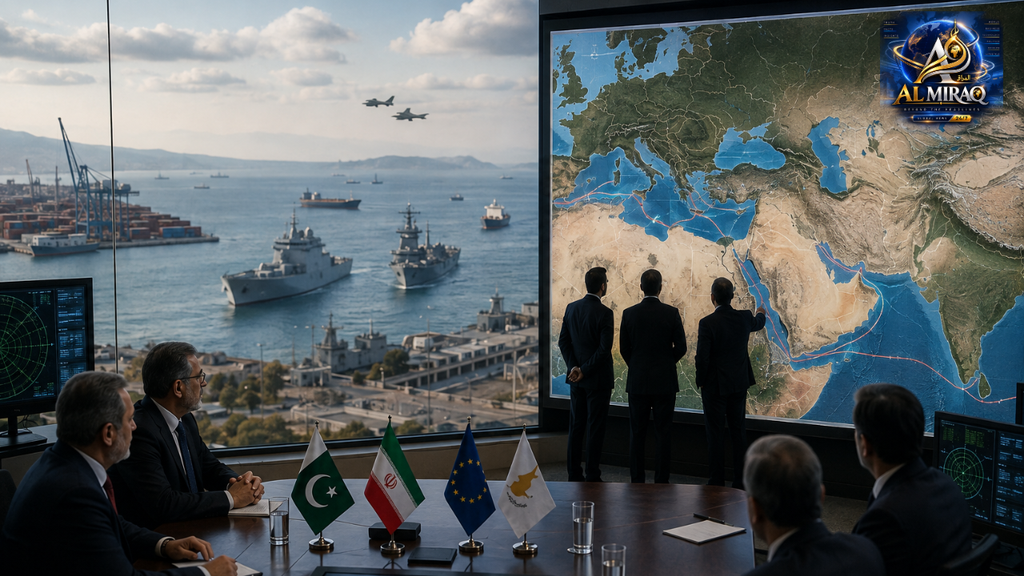
European Security Could Also Be Affected
Although the immediate focus of the crisis is centered on Iran, the consequences could reach Europe.
European countries remain exposed to disruptions in energy markets and global shipping. A prolonged crisis around the Persian Gulf could increase transportation costs and contribute to wider economic uncertainty.
European governments also have an interest in preventing the conflict from expanding geographically.
Any escalation involving maritime routes could place additional pressure on European governments to coordinate with international partners on shipping security.
NATO members would likewise have to assess the broader security implications of any prolonged confrontation affecting international waterways.
The supplied information does not establish that NATO is directly involved in the diplomatic discussions surrounding Munir’s Tehran visit. However, the security of major international shipping routes naturally has implications for the broader transatlantic security environment.
What About Bulgaria and Cyprus?
Bulgaria and Cyprus are among the European countries that could be indirectly affected by wider instability in the Middle East and eastern Mediterranean.
Cyprus occupies a strategically important position in the eastern Mediterranean and is closely connected to wider European security discussions. Bulgaria, meanwhile, is an EU and NATO member located on the Black Sea, making it part of Europe’s broader strategic environment.
A major escalation involving Iran would not necessarily create an immediate military threat to either country. However, prolonged instability could affect energy markets, maritime transportation, migration patterns and European security planning.
The connection between the Middle East and European security is therefore increasingly difficult to separate.
For European governments, the priority would likely remain preventing a wider regional conflict and protecting international trade routes.
Diplomatic Progress Still Needs to Be Tested
While Pakistani officials have described the Tehran visit in positive terms, the long-term significance of the engagement will depend on what happens next.
Diplomatic meetings can establish communication, but they do not automatically resolve fundamental disputes.
The key questions include whether Iran and the United States can reduce tensions, whether maritime security can be maintained, whether the Strait of Hormuz can remain open and whether broader diplomatic negotiations can resume.
There is also uncertainty over the exact measures that may emerge from Pakistan’s diplomatic engagement.
Statements describing meetings as “productive” are politically significant, but concrete outcomes generally require follow-up negotiations and verifiable actions.
Pakistan’s Diplomatic Balancing Act
Islamabad now faces the challenge of maintaining momentum without becoming trapped between competing geopolitical blocs.
Pakistan has traditionally emphasized peaceful resolution of regional disputes and has repeatedly highlighted the importance of dialogue.
Its geographic position gives it a direct stake in stability across the Gulf and neighboring Iran. At the same time, its economic and strategic ties with the United States and Gulf countries make neutrality and careful diplomacy essential.
The Asim Munir Iran visit therefore represents more than a bilateral engagement.
It reflects Pakistan’s attempt to use its regional relationships to support de-escalation while protecting its own national interests.
What Happens Next?
The next stage will be closely watched for evidence of whether the Tehran discussions produce practical diplomatic results.
Potential developments could include continued communication between Iran and Pakistan, further diplomatic contacts involving other regional and international actors, and efforts to reduce tensions around strategic maritime routes.
The reopening or continued secure operation of the Strait of Hormuz would be particularly important for international markets.
However, the available information does not establish that a final agreement has been reached on these issues.
Further statements from Iran, Pakistan and the United States will be necessary to determine whether the latest diplomatic efforts can develop into a broader process.
Conclusion
The Asim Munir Iran visit has placed Pakistan at an important point in the evolving diplomatic landscape surrounding Iran and the United States.
The discussions in Tehran reportedly focused on reducing tensions, encouraging dialogue and addressing the security and reopening of the Strait of Hormuz. Iranian President Masoud Pezeshkian also used the engagement to communicate Tehran’s position and concerns.
For Pakistan, the stakes are considerable. A wider regional conflict could affect its economy, energy security, border stability and relations with major international partners. For Europe, instability around the Middle East could create additional risks for energy supplies, shipping and wider security.
The significance of the visit will ultimately depend on what follows. Positive diplomatic language is only the beginning. Concrete measures to reduce tensions, protect maritime routes and create space for negotiations will determine whether Pakistan’s latest engagement becomes a meaningful contribution to regional stability.
For now, the Asim Munir Iran visit demonstrates Islamabad’s effort to keep diplomacy alive at a time when the consequences of further escalation could extend well beyond Iran and the United States, affecting Pakistan, the Gulf, Europe and the wider international security environment.
Al Miraq — Beyond the Headlines.