
By Al Miraq News Desk
Published: August 26, 2026
Iran-US Tensions Intensify as Pakistan Pushes Diplomacy and Europe Watches Closely
Iran-US tensions have entered another sensitive phase as Tehran signals a desire to move beyond its prolonged state of confrontation with Washington while warning neighboring countries against supporting American economic pressure. At the same time, Pakistan is attempting to keep diplomatic channels open, with Field Marshal Syed Asim Munir traveling to Tehran for high-level discussions focused on regional peace and security.
The diplomatic effort comes as the dispute over the Strait of Hormuz remains one of the most serious flashpoints in the wider confrontation. The waterway is vital to global energy markets, and any prolonged disruption could affect oil supplies, shipping costs and economies far beyond the Middle East.
Iranian President Masoud Pezeshkian has described the current situation as one of “neither war nor peace” and has argued that Tehran needs to move beyond the deadlock. Recent reporting indicates that he has defended a memorandum of understanding with the United States as a possible path toward ending the confrontation, while emphasizing that Iran would not accept an agreement it regarded as a capitulation.
Against that backdrop, Pakistan’s renewed diplomatic engagement with Tehran could become an important channel for reducing tensions.
Iran-US Tensions Put Diplomacy Back in Focus
President Pezeshkian’s latest position reflects a difficult balance inside Iran.
On one side, Tehran continues to resist what it views as unacceptable American pressure and refuses to surrender its strategic interests. On the other, Iran faces substantial economic risks from sanctions, restrictions on trade and the continuing uncertainty surrounding regional security.
Pezeshkian has argued that Iran needs to escape the current “neither war nor peace” situation and reduce the risks that discourage investment and economic activity. He has also maintained that the proposed understanding with Washington was based on what Iranian officials described as dignity, wisdom and national interest.
The significance of that position is that it leaves room for diplomacy even while tensions remain high.
The challenge is that Washington and Tehran continue to disagree over the conditions required for a lasting settlement. The original negotiating framework has not produced a final agreement, while the dispute over sanctions and maritime access remains unresolved.
Pakistan Attempts to Keep Talks Alive
Pakistan has increasingly positioned itself as a mediator between the United States and Iran.
Field Marshal Asim Munir’s latest Tehran visit was part of Islamabad’s broader effort to encourage dialogue and support regional stability. Pakistan’s military and diplomatic officials have repeatedly emphasized that the country wants a peaceful and comprehensive resolution to the conflict.
Reuters reported that Munir had spoken with US President Donald Trump before traveling to Tehran, with Pakistani sources saying Washington wanted Islamabad to use its influence to encourage Iran to return to negotiations.
The development gives Pakistan a potentially unusual diplomatic role: maintaining communication with Tehran while also engaging Washington.
Pakistan and Iran subsequently described their discussions as constructive, with Pakistani Interior Minister Mohsin Naqvi saying significant progress had been made on efforts to de-escalate the conflict and address the situation around the Strait of Hormuz.
However, progress in talks does not necessarily mean that a comprehensive agreement is close.
Strait of Hormuz Remains the Central Flashpoint
The Strait of Hormuz is at the heart of the current crisis.
The narrow waterway connects the Persian Gulf with the Gulf of Oman and is one of the world’s most important energy corridors. Disruption there can quickly affect international oil markets, shipping insurance and transportation costs.
The confrontation between Iran and the United States has already created uncertainty for commercial shipping. Recent reports indicate that Iran and Oman have been discussing an interim arrangement that could allow navigation through a temporary maritime corridor while work toward a longer-term solution continues.
The negotiations illustrate the central problem facing all sides.
Washington wants reliable freedom of navigation and continued access for global energy shipments. Tehran, meanwhile, has linked the future of the waterway to broader questions involving sanctions, military pressure and the treatment of Iranian economic interests.
Any agreement that reduces the immediate risk of disruption could provide breathing space for wider diplomacy.
But a temporary maritime arrangement would not by itself resolve the larger Iran-US confrontation.
Iran Warns Neighboring Countries Against Supporting Washington
Iranian officials have also issued increasingly strong warnings to countries that might assist US economic or military efforts.
Iran’s newly appointed security leadership has warned neighboring states against participating in American economic pressure against Tehran. Officials have suggested that countries facilitating such pressure could face retaliation.
Those statements are particularly significant for Gulf countries because the region’s energy infrastructure and export routes are deeply interconnected.
The warnings also create a difficult situation for governments that maintain security partnerships with Washington while trying to avoid direct involvement in the conflict.
For Iran, the message is intended to raise the cost of cooperation with the United States. For Washington and its partners, however, such threats could strengthen arguments for additional defensive measures.
That creates a cycle in which economic pressure produces security responses, which then increase the possibility of further escalation.
Europe Faces a New Security Dimension
The consequences of Iran-US tensions are no longer limited to the Middle East.
A recent Financial Times report said Iranian forces had assessed possible targets in southeastern Europe, including US military assets in Bulgaria and potential facilities in Cyprus, if Washington were to intensify military action against Tehran. The report cited two people described as insiders close to the Iranian regime.
It is important to distinguish between contingency planning and an actual decision to launch an attack.
The reports did not establish that Iran had ordered an attack against Bulgaria or Cyprus. Bulgarian authorities have also said there was no direct national-security threat based on their available intelligence.
Nevertheless, the reports have created concern because southeastern Europe has become increasingly connected to the wider Middle Eastern security environment.
Why Bulgaria Matters
Bulgaria’s Bezmer Air Base has become particularly relevant.
Bulgaria’s parliament authorized the temporary deployment of US KC-135 aerial-refueling aircraft and American military personnel at the base to support US operations in the Middle East.
That decision has increased the strategic importance of the facility.
Bulgarian authorities subsequently strengthened security measures around the base following reports that Iranian forces had assessed possible US targets in southeastern Europe. At the same time, Bulgarian officials stressed that there was no confirmed direct threat to the country’s national security.
The situation highlights a wider European dilemma.
Countries that provide logistical or military support to the United States can become more closely connected to Middle Eastern conflicts even when they are not directly participating in combat operations.
Why Cyprus Is Also Important
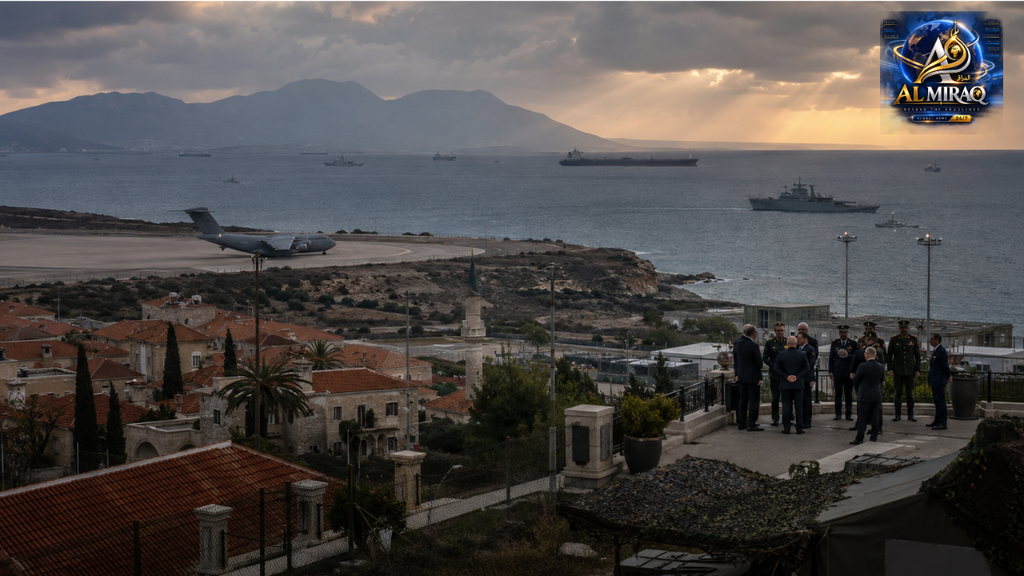
Cyprus occupies a strategically important position in the eastern Mediterranean.
British military facilities on the island have historically played a major role in Britain’s regional operations and broader Middle Eastern security posture.
Reports that Cyprus had been considered in Iranian contingency planning therefore attracted significant attention. However, Cypriot officials have rejected the idea that the country is currently an Iranian target. Government sources said Cyprus remained in contact with Tehran, while the United Kingdom said its military facilities were protected by robust security measures.
This distinction is crucial.
A reported assessment of potential targets should not automatically be interpreted as evidence that an attack is imminent.
NATO Watches the Situation Closely
The possibility of Iranian retaliation against military facilities in southeastern Europe also raises questions for NATO.
Bulgaria is a NATO member, meaning any confirmed armed attack against Bulgarian territory could have implications far beyond the immediate bilateral relationship between Sofia and Tehran.
NATO officials have stressed the alliance’s readiness to respond to threats against member states. Bulgarian Prime Minister Rumen Radev and NATO Secretary General Mark Rutte have also discussed the changing security environment following reports concerning potential Iranian targets.
The alliance therefore faces a complicated strategic problem.
NATO must protect its members without unnecessarily expanding the geographic scope of the conflict.
A direct Iranian strike on a NATO member would dramatically change the political character of the crisis and could force European governments to reconsider their involvement.
For this reason, preventing escalation may be as important as strengthening defensive preparations.
Iran-Linked Cyber Threats Add Another Layer
The confrontation is also increasingly extending into cyberspace.
A recent report said Iran-linked hackers were blamed for an attack that temporarily shut down a small British power plant for four days. The incident did not affect Britain’s wider electricity network, but it raised concerns about the vulnerability of critical infrastructure to state-linked cyber operations.
The reported incident is significant because energy infrastructure is considered particularly sensitive during periods of geopolitical confrontation.
Cyberattacks can provide governments or affiliated groups with ways to apply pressure without immediately crossing the threshold of a conventional military strike.
For European countries, the lesson is clear: security risks connected to the Iran-US confrontation may include cyber operations, infrastructure disruption, disinformation and other forms of hybrid activity in addition to conventional military threats.
What the Crisis Means for Global Energy Markets
The economic consequences of Iran-US tensions could extend well beyond the countries directly involved.
The Strait of Hormuz carries a substantial share of global energy shipments. Prolonged disruption can increase transportation costs and contribute to higher energy prices.
Higher oil prices can affect inflation, manufacturing, transport and household costs across Asia, Europe and North America.
European countries are particularly sensitive because energy security remains a major strategic concern following years of disruption to traditional energy supply arrangements.
Any long-term reduction in traffic through Hormuz could encourage governments and energy companies to rely more heavily on alternative routes, strategic reserves and diversified suppliers.
But such changes cannot be implemented instantly.
That is why diplomatic efforts aimed at keeping the waterway open remain economically important.
Pakistan’s Role Could Become More Important
Pakistan’s diplomatic position gives Islamabad an opportunity to act as a bridge between Tehran and Washington.
The country maintains close relations with Iran while also having substantial strategic ties with the United States and other Western partners.
That balancing position is difficult, but it also provides Pakistan with channels that may be unavailable to other governments.
The latest Tehran discussions indicate that Islamabad is attempting to use those relationships to encourage de-escalation. Pakistan’s earlier mediation contributed to the June memorandum between Washington and Tehran, although the negotiating process later stalled.
Whether Pakistan can help revive that framework remains uncertain.
Much will depend on whether Washington and Tehran are prepared to make reciprocal concessions.
What Remains Unclear
Several major questions remain unresolved.
First, it is unclear whether the United States and Iran can revive meaningful negotiations after the failure of the previous timetable.
Second, the future of the Strait of Hormuz remains uncertain despite discussions involving Iran and Oman.
Third, reports concerning potential Iranian targets in Bulgaria and Cyprus remain assessments rather than evidence of an imminent attack.
Fourth, European governments must determine how much military support they can provide to the United States without becoming directly involved in a broader confrontation.
Finally, the economic pressure on Iran could either push Tehran toward negotiations or encourage a more confrontational response.
The outcome will depend on decisions made in Washington, Tehran and regional capitals over the coming weeks.
A Dangerous Balance Between Pressure and Diplomacy
The current situation demonstrates the difficulty of managing a conflict that combines military pressure, economic sanctions, maritime security and diplomatic negotiations.
Iran wants relief from the economic risks created by the confrontation but continues to insist that it will not accept what it considers humiliation or surrender.
The United States wants greater pressure on Tehran while also seeking to prevent the conflict from producing wider regional instability.
Pakistan is trying to create space for negotiations.
European countries are preparing for possible spillover while attempting to avoid becoming direct participants in the confrontation.
The Strait of Hormuz remains the clearest symbol of that tension: economically indispensable, strategically vulnerable and deeply connected to the political dispute between Washington and Tehran.
Conclusion
Iran-US tensions remain at a critical crossroads, with diplomacy competing against growing economic and security pressure.
President Masoud Pezeshkian’s call to move beyond the “neither war nor peace” situation suggests that Tehran still sees negotiations as a possible route out of the crisis. Pakistan’s engagement, including Field Marshal Asim Munir’s Tehran visit, adds another diplomatic channel at a time when direct US-Iran negotiations remain stalled.
At the same time, warnings involving the Strait of Hormuz, economic retaliation and possible military targets in southeastern Europe demonstrate how quickly a Middle Eastern confrontation could develop wider international consequences.
Reports concerning Bulgaria and Cyprus should be treated carefully because they describe assessed or potential scenarios rather than confirmed plans for attacks. Bulgarian and Cypriot authorities have publicly sought to reassure their populations while maintaining heightened vigilance.
For Europe, NATO and the global economy, the immediate priority is therefore to prevent escalation while keeping diplomatic channels open.
Whether Pakistan’s mediation can help restore negotiations, whether the Strait of Hormuz can be stabilized and whether Washington and Tehran can find a workable political settlement will determine whether the current crisis moves toward de-escalation or a much wider confrontation.
Al Miraq — Beyond the Headlines.