House Republicans Reject Impeachment Push Against Pete Hegseth
The political controversy surrounding US Defense Secretary Pete Hegseth has taken a significant turn after House Republicans voted to block an attempt to impeach the Pentagon chief. The decision represents an important victory for President Donald Trump and his administration, which has faced growing criticism over its military policies and involvement in international conflicts.
On November 10, 2026, the US House of Representatives voted 211–204 to refer the impeachment resolution against Hegseth to the House Judiciary Committee. The procedural decision effectively stopped the immediate effort to advance impeachment proceedings against the defense secretary.
The resolution was introduced by Republican Representative Thomas Massie of Kentucky, who accused Hegseth of serious misconduct and violations of constitutional responsibilities. His allegations focused on the administration’s military operations involving Iran, Yemen, and Venezuela, along with concerns about civilian casualties and the use of American military power.
However, most Republican lawmakers refused to support the impeachment campaign. Massie was the only Republican to oppose the motion referring the resolution to the committee, while Democrats who participated in the vote also opposed it.
The result demonstrated that Trump continues to maintain considerable influence among congressional Republicans, even as disagreements over his administration’s foreign policy become increasingly visible.
For Hegseth, the vote provides temporary relief from a major political challenge. Nevertheless, the controversy surrounding his leadership is unlikely to disappear, particularly as Democrats prepare to take control of Congress in January 2027.
Thomas Massie Leads the Impeachment Campaign Against Hegseth
Republican Representative Thomas Massie became the central figure behind the effort to remove Hegseth from his position.
Massie has frequently disagreed with Trump and other Republican leaders on issues involving military intervention, government spending, and presidential authority. His impeachment proposal reflected those differences and raised questions about how the administration has handled military operations.
The Kentucky congressman introduced eight articles of impeachment against Hegseth. He argued that the defense secretary had exceeded his authority and failed to respect constitutional and legal requirements governing military activities.
One of the most significant allegations concerned the US military campaign against Iran. Massie questioned the administration’s decision to conduct military operations without obtaining congressional authorization.
He also raised concerns about strikes against suspected drug-trafficking vessels, civilian casualties in Iran, and military activities connected to Venezuela and Yemen.
Another allegation involved Democratic Senator Mark Kelly, who had publicly discussed the responsibility of military personnel to refuse unlawful orders. Massie’s resolution raised concerns about possible retaliation against the senator.
Despite these accusations, Massie struggled to gain support from Republican lawmakers.
His impeachment campaign also came after he lost his Republican primary earlier in 2026 to a Trump-backed challenger. This political defeat further highlighted his growing disagreement with the administration.
Although the impeachment effort failed to advance, Massie’s actions brought renewed attention to questions about congressional oversight and the limits of presidential military authority.
Eight Articles of Impeachment Raise Serious Questions
The impeachment resolution against Hegseth contained eight separate articles addressing different aspects of his leadership and the Trump administration’s military decisions.
These allegations were presented by Massie and should not be treated as established findings of misconduct. Nevertheless, they created a significant political debate about the responsibilities of the defense secretary.
The first major area of concern involved the Iran war. Massie argued that the administration had conducted military operations without proper congressional authorization, raising questions about the War Powers Resolution and constitutional limits on executive authority.
Another important issue concerned civilian protection during military operations. The resolution questioned the administration’s handling of a deadly strike on a school in Minab, Iran, where reports indicated that more than 168 people were killed.
The impeachment articles also addressed American strikes against suspected drug-trafficking vessels in international waters. Massie argued that some of these operations raised concerns about unlawful killings and the legal responsibilities of US military personnel.
Additional allegations involved operations in Venezuela and Yemen, along with questions about the treatment of political critics.
The resolution also raised concerns about the alleged retaliation against Senator Mark Kelly following his comments about military personnel and unlawful orders.
Together, the eight articles presented a broad challenge to Hegseth’s leadership.
However, Republican lawmakers largely rejected the argument that these allegations justified impeachment. Many viewed the dispute as a political disagreement over military strategy rather than evidence of conduct that required removing a cabinet official.
Pete Hegseth Rejects Allegations and Defends Military Operations
Pete Hegseth strongly rejected the impeachment accusations and described the campaign against him as a politically motivated effort to damage the Trump administration.
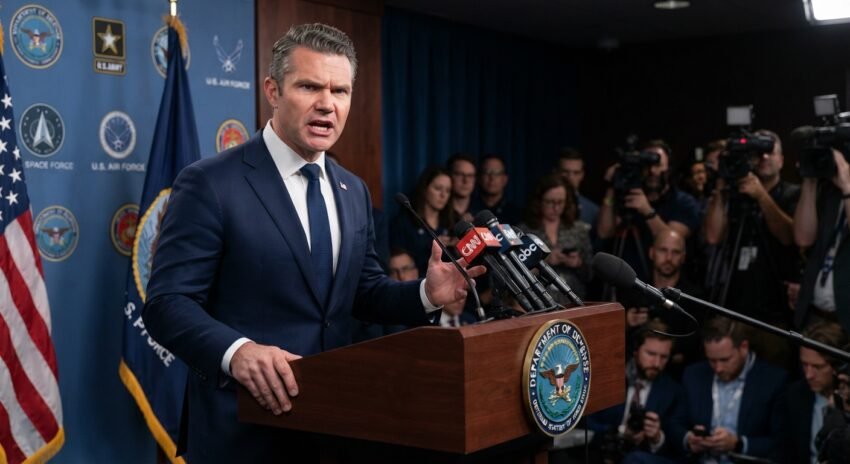
During a Pentagon news conference on November 10, the defense secretary criticized the resolution and defended the military operations conducted under his leadership.
Hegseth characterized the impeachment effort as a political spectacle and argued that the accusations were an attempt to undermine American military leadership.
He maintained that the operations involving Iran, Venezuela, Yemen, and suspected drug-trafficking organizations were lawful actions authorized through the administration’s military command structure.
The defense secretary also defended American service members, emphasizing that military personnel should not become targets of political attacks for carrying out lawful orders.
His appearance at the Pentagon was particularly significant because it marked his first news conference there in approximately six months.
The briefing provided an opportunity for Hegseth to address the accusations directly and present the administration’s position before the House vote.
Following the decision, Pentagon spokesman Sean Parnell described the outcome as a major victory for Hegseth and the department.
Although the vote prevented an immediate impeachment confrontation, it did not resolve the underlying questions about military operations and government accountability.
Donald Trump Celebrates Victory for His Defense Secretary
President Donald Trump quickly responded to the House decision and praised Republican lawmakers for blocking the impeachment effort.
Trump has repeatedly defended Hegseth against criticism and considers him an important member of his national security team.
Following the vote, the president celebrated the result and described the failure of the impeachment campaign as a victory for the defense secretary.
Trump also criticized Thomas Massie, who had introduced the resolution and challenged the administration’s military policies.
The president’s response demonstrated how closely the controversy was connected to the wider political relationship between the White House and congressional Republicans.
Vice President JD Vance also expressed support for Hegseth, arguing that the impeachment allegations were not justified.
Vance suggested that disagreements about the defense secretary’s management of the Pentagon should be addressed through normal political processes rather than impeachment.
The strong support from Trump and Vance helped Hegseth avoid an immediate political crisis.
However, the administration’s celebration does not mean that every allegation has been investigated or resolved. The House vote was a procedural decision rather than a judicial determination of whether Hegseth had violated the law.
Iran War Becomes a Major Issue in the Impeachment Controversy
The US conflict involving Iran has become one of the biggest political challenges facing the Trump administration.
Hegseth has played a central role in defending the military campaign and explaining the administration’s national security strategy.
However, the conflict has generated criticism from Democrats and some conservative lawmakers who believe Congress should exercise greater control over decisions involving military force.
Under the US Constitution, Congress has significant responsibilities involving declarations of war, military funding, and oversight. The president serves as commander-in-chief of the armed forces.
This division of authority has created disagreements over how much power the president can exercise when ordering military operations without specific congressional authorization.
Massie used these constitutional questions as one of the central arguments in his impeachment resolution.
Critics also raised concerns about civilian casualties and the long-term consequences of continued military involvement.
The economic effects of the conflict have added another dimension to the debate. Higher energy prices and concerns about the cost of military operations have increased public attention on the administration’s foreign policy.
The Iran war has therefore become more than a military issue. It is also an important political question that could influence public opinion and future congressional decisions.
Democrats May Revive the Impeachment Effort in 2027
Although Republicans successfully blocked the immediate impeachment attempt, the controversy may return when the new Congress begins its work in January 2027.
Democrats achieved major victories in the November midterm elections and are expected to take control of both chambers of Congress.
This political shift could provide Democratic lawmakers with additional opportunities to investigate Hegseth’s leadership and examine the administration’s military decisions.
House Democratic Leader Hakeem Jeffries has supported the impeachment effort and indicated that his party intends to hold the defense secretary accountable.
A Democratic-controlled House could organize hearings, request government documents, question military officials, and introduce new impeachment measures.
These actions could increase political pressure on Hegseth and other senior officials within the Trump administration.
However, impeachment does not automatically mean removal from office.
Under the US Constitution, the House of Representatives can impeach federal officials through a majority vote. If articles of impeachment pass, the case moves to the Senate for a trial.
A conviction requires a two-thirds majority of senators present.
This constitutional requirement makes removing a cabinet official particularly difficult, even when the House supports impeachment.
Therefore, Democrats may be able to renew the political challenge, but successfully removing Hegseth would require substantial support beyond their own party.
What the House Decision Means for the Pentagon
The vote has important consequences for the Department of Defense and its leadership.
The Pentagon manages America’s armed forces and plays a central role in national security, international military operations, and defense policy.
The defense secretary is responsible for overseeing the department and implementing the president’s military objectives.
Political uncertainty surrounding the position can create difficulties for military leadership, particularly during an international conflict.
Hegseth’s supporters believe that allowing him to remain in office will provide stability and enable the Pentagon to concentrate on its responsibilities.
They also argue that military decisions should not be disrupted by political disagreements in Congress.
Critics, however, believe that strong congressional oversight is essential to prevent abuses of executive authority and ensure that military operations follow the law.
The disagreement highlights a larger question about how the United States should balance effective military leadership with democratic accountability.
The House decision has temporarily reduced the immediate political threat facing Hegseth, but it has not ended the debate over the Pentagon’s responsibilities.
Republican Party Divisions Become More Visible
The impeachment controversy also exposed disagreements within the Republican Party.
Although most Republicans supported referring the resolution to the Judiciary Committee, Massie’s opposition demonstrated that some conservative lawmakers remain willing to challenge the Trump administration.
Republicans have different views on American involvement in international conflicts.
Some favor a more restrained foreign policy and believe Congress should exercise stronger control over military operations.
Others support a more aggressive national security strategy and believe the president needs flexibility when responding to international threats.
The Iran conflict has made these differences increasingly visible.
Massie’s impeachment effort brought those disagreements directly into the House of Representatives.
However, the final vote showed that Republican leadership maintained enough support to prevent an immediate impeachment proceeding.
The administration will still need to manage these internal differences as questions about military spending, foreign policy, and national security continue to dominate Washington.
Historical Importance of the Pete Hegseth Impeachment Attempt
The attempt to impeach Hegseth is notable because cabinet secretaries have rarely faced impeachment proceedings in American history.
One important historical example involved William Belknap, who served as secretary of war under President Ulysses S. Grant.
Belknap was impeached by the House in 1876 following allegations involving corruption and financial misconduct. He resigned before the impeachment proceedings were completed and was ultimately acquitted by the Senate.
Another modern example involved Homeland Security Secretary Alejandro Mayorkas, who was impeached by the House in 2024 over allegations concerning immigration policy and border security. The Senate dismissed the charges.
The Hegseth controversy is different because its central allegations involve military authority, constitutional responsibilities, and overseas military operations.
Nevertheless, these historical examples demonstrate that senior cabinet officials can face impeachment when lawmakers believe their conduct deserves serious scrutiny.
The current dispute could influence future discussions about congressional oversight and the responsibilities of senior national security officials.
What Happens Next for Pete Hegseth?
For now, Pete Hegseth remains in his position as defense secretary after receiving support from House Republicans and President Trump.
The failed impeachment effort provides the administration with an opportunity to shift attention back toward military operations and other national security priorities.
However, the political situation could change when Democrats assume control of Congress in January 2027.
New investigations and oversight hearings could bring the allegations back into the spotlight.
Hegseth may also face questions about the Iran war, civilian protection, military decision-making, and the legal basis for American operations overseas.
The administration will likely continue defending its military policies while attempting to maintain Republican support.
Meanwhile, Democrats may use their congressional majorities to increase pressure on the Pentagon and demand greater transparency.
The future of the impeachment controversy will depend on the evidence presented, the priorities of congressional leaders, and the willingness of lawmakers to pursue further action.
Conclusion: Hegseth Wins a Political Battle but Faces Future Challenges
House Republicans have delivered a major political victory to Pete Hegseth by blocking the immediate effort to impeach the Pentagon chief.
The 211–204 vote prevented Thomas Massie’s impeachment resolution from advancing toward a direct House vote and provided temporary relief for President Donald Trump’s administration.
Hegseth rejected the allegations, defended his military decisions, and received strong support from the president and other senior officials.
Nevertheless, the controversy is far from over.
Questions involving the Iran war, military operations, civilian casualties, constitutional authority, and congressional oversight are expected to remain important political issues.
Democrats are also preparing to take control of Congress in January 2027, potentially creating new opportunities for investigations and further impeachment discussions.
Although Hegseth has avoided an immediate threat to his position, his political future will depend partly on how the administration handles growing scrutiny of its military policies.
Ultimately, the House decision represents a temporary victory for the Trump administration, but it does not end the wider debate over military accountability and the limits of presidential power.