Meta Description: New Zealand Election 2026 live results show National and Labour locked in a close contest. Explore the latest vote count, Christopher Luxon, Chris Hipkins, minor parties, coalition negotiations, and the political future of New Zealand.
Focus Keyword: New Zealand Election 2026 Live Results
Secondary Keywords: New Zealand General Election 2026, National Party vs Labour, Christopher Luxon, Chris Hipkins, New Zealand election results, Opportunity Party, New Zealand coalition government.
Introduction
The New Zealand General Election 2026 is turning into one of the country’s most closely contested political events in recent years. Early and developing election results show the governing National Party and the opposition Labour Party competing almost neck-and-neck, creating uncertainty about which political bloc will eventually form the next government. With voters divided between the country’s two largest political parties and several smaller parties gaining attention, the election is shaping up to be a significant moment for New Zealand’s political future.
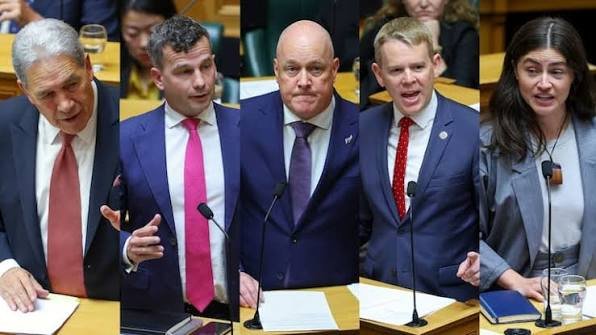
The contest has attracted widespread attention because neither major party appears to have a comfortable advantage. National, led by Prime Minister Christopher Luxon, is attempting to secure another term in office, while Labour, under Chris Hipkins, is hoping to return to government. However, the growing influence of smaller political parties means that winning the largest share of votes may not automatically guarantee the ability to govern.
As votes continue to be counted, political observers are closely watching the performance of the National Party, Labour, the Green Party, ACT New Zealand, New Zealand First, and the emerging Opportunity Party. The final balance of power could depend on negotiations between these parties after the official results become available.
National and Labour Face an Extremely Close Election Battle
The biggest development in the New Zealand Election 2026 live results is the extremely narrow gap between National and Labour. Both parties are attracting support from different sections of the electorate, but neither has established a decisive lead that would guarantee a straightforward path to government.
According to developing results reported on election night, the two major parties have remained close to 30 percent of the party vote. At one stage, with approximately 90 percent of votes counted in the Guardian’s live coverage, National was reported at around 29.3 percent, while Labour stood at approximately 29.1 percent.
This small difference demonstrates how competitive the election has become. Even a relatively small movement in voter support could influence the final parliamentary balance and determine which political bloc has the strongest position during coalition negotiations.
For National, the results represent a difficult test of public confidence in the current government. For Labour, the close contest offers an opportunity to challenge the governing coalition and potentially return to power.
However, the election is not simply about which party finishes first. New Zealand’s electoral system makes parliamentary seats and coalition arrangements equally important. As a result, smaller parties could have a major influence on the final outcome.
Christopher Luxon Faces Pressure to Secure Another Term
Prime Minister Christopher Luxon is one of the central figures in the 2026 election. His National Party entered the campaign hoping to convince voters that its economic policies and governing approach deserved another term.
Luxon, a former business executive, became prime minister after National achieved a major political victory in the 2023 general election. Since taking office, his government has faced difficult questions about economic performance, household expenses, public services, employment, and the overall direction of the country.
The 2026 election has therefore become an important opportunity for voters to evaluate the government’s record.
National has attempted to present itself as a party capable of managing economic challenges, improving business confidence, and providing political stability. Supporters argue that consistent leadership and responsible economic management are essential during uncertain economic conditions.
Nevertheless, the close election results suggest that many voters remain unconvinced or are considering alternative political choices.
Luxon’s challenge is not limited to defeating Labour. He must also maintain sufficient support from National’s existing coalition partners and ensure that the combined parliamentary numbers are enough to form a government.
If National finishes with the largest party vote but cannot secure a reliable parliamentary majority, Luxon could face complicated negotiations before knowing whether he will remain prime minister.
Chris Hipkins and Labour See an Opportunity for Political Change
Labour leader Chris Hipkins is another major figure in the election. His party is attempting to regain the political support it lost during the previous election cycle and convince voters that it offers a stronger alternative to the current government.
Hipkins previously served as prime minister and has experience leading the country through challenging political and economic circumstances. His campaign has focused on presenting Labour as a credible governing alternative while highlighting concerns about the direction of the National-led administration.
The close results provide Labour with a reason to remain optimistic. A narrow gap between the two major parties means that the opposition remains competitive and could potentially gain enough parliamentary support to participate in the next government.
However, Labour also faces challenges. It must demonstrate that it can work effectively with other parties, particularly the Greens and Te Pāti Māori, while developing a coalition arrangement that can maintain parliamentary stability.
Hipkins has indicated that political leaders may need to find common ground as the election results become clearer. This approach reflects the reality of New Zealand’s proportional electoral system, where cooperation between political parties is often necessary to form a government.
If Labour can strengthen its position during the final count, coalition negotiations could become increasingly important.
Opportunity Party Emerges as a Potential Kingmaker
One of the most interesting developments in the New Zealand Election 2026 results is the growing importance of the Opportunity Party.
The party has attracted attention because it could enter Parliament and potentially influence which major political bloc forms the next government. Led by Qiulae Wong, Opportunity has presented itself as an alternative to traditional political parties and has appealed to voters looking for a different approach to national leadership.
Its potential parliamentary breakthrough is particularly significant because New Zealand uses a mixed-member proportional electoral system.
Under this system, political parties generally need to secure at least five percent of the party vote or win an electorate seat to qualify for parliamentary representation. Opportunity’s support has been close to or above the five-percent threshold in developing election coverage.
If the party successfully enters Parliament with several seats, it could become an important participant in government negotiations.
The party has indicated that it is open to discussions with either major political side. This flexibility could make it attractive to parties seeking additional parliamentary support.
However, coalition negotiations will depend on political priorities, policy agreements, and the willingness of leaders to compromise.
Opportunity’s performance could therefore become one of the defining stories of the 2026 New Zealand election.
Smaller Parties Could Determine the Next Government
Although National and Labour dominate much of the election coverage, smaller political parties are playing an increasingly important role.
ACT New Zealand and New Zealand First are important partners for the current centre-right political bloc. Both parties have their own political priorities and could influence the policies of any future National-led government.
On the other side, the Green Party and Te Pāti Māori could play important roles in supporting a Labour-led administration.
The Greens traditionally focus on environmental protection, climate action, social equality, and sustainable development. Their parliamentary representation could give them considerable influence if Labour needs their support to form a government.
Te Pāti Māori also represents an important political voice, particularly regarding Māori rights, representation, cultural identity, and social policy.
The election results suggest that smaller parties could secure enough seats to make coalition negotiations more complicated than in a conventional two-party contest.
This situation highlights an important feature of New Zealand politics: the largest party does not necessarily govern alone. Instead, political leaders must build relationships with other parties and agree on shared policy objectives.
Cost of Living and Grocery Prices Become Major Election Issues
Economic concerns have been central to the 2026 election campaign. Rising household expenses, grocery prices, housing affordability, employment opportunities, and the broader economic outlook have influenced political discussions across the country.
The election has even been described in some coverage as a supermarket election because grocery prices and competition within the supermarket industry became important campaign issues.
For many households, the cost of everyday essentials is a major concern. Families are paying close attention to food prices, electricity bills, transport costs, rent, and mortgage payments.
These financial pressures have created an environment in which voters are demanding practical economic solutions rather than political promises alone.
National has emphasized its economic management approach and its plans to strengthen business confidence. Labour, meanwhile, has attempted to present different policy solutions and highlight areas where it believes the government has fallen short.
The close election results suggest that economic dissatisfaction may have influenced voter decisions across the political spectrum.
For the next government, addressing household financial pressures will likely be one of the most important responsibilities.
Understanding New Zealand’s Mixed-Member Proportional Voting System
To understand why the 2026 election is so close, it is important to understand how New Zealand’s electoral system works.
New Zealand uses a mixed-member proportional system, commonly known as MMP. Under this system, voters receive two separate votes.
The first vote is for a political party. This vote largely determines how many seats each party receives in Parliament.
The second vote is for a local electorate candidate. This allows voters to select a representative for their geographical area.
The proportional system means that parliamentary representation is generally linked to the percentage of party votes received by each political party.
A party normally needs at least five percent of the party vote or must win an electorate seat to qualify for parliamentary representation.
This system allows smaller parties to gain seats even when they do not win large numbers of individual electorates.
It also explains why a political party can finish first in the nationwide party vote but still need support from several smaller parties to form a government.
In the 2026 election, this system is particularly important because National and Labour are so closely matched.
The final parliamentary balance will depend on the completed vote count, electorate results, party vote allocations, and special votes.
Why the Final Election Results Could Take Weeks
Although preliminary results are being released on election night, the final official outcome will take longer.
New Zealand’s Electoral Commission provides preliminary results as votes are counted. These results offer an early picture of political support but are not the final certified outcome.
Special votes, including ballots from overseas voters and people who vote outside their electorates, must also be processed.
According to election coverage, the official final results are expected on November 27, 2026.
These additional votes matter because they can change the percentage of support received by political parties and influence the allocation of parliamentary seats.
The final count is especially important when the difference between the two largest parties is extremely small.
A narrow lead on election night should therefore not automatically be interpreted as a confirmed victory.
Political leaders, supporters, and analysts will need to wait for the official results before making definitive statements about the final parliamentary balance.
Coalition Negotiations Could Shape New Zealand’s Political Future
Once the final results become available, political parties will begin considering their options for forming a government.
Coalition negotiations can involve discussions about ministerial positions, policy priorities, parliamentary cooperation, and agreements on major national issues.
If National secures enough support from ACT and New Zealand First, it may be able to continue governing.
However, if the right-leaning bloc falls short of a majority, additional support could become necessary.
Labour may also explore an arrangement involving the Green Party, Te Pāti Māori, and potentially other parliamentary groups.
Opportunity could become particularly important if neither major political bloc can reach the required parliamentary numbers without its support.
The negotiations may not be simple. Each political party will want to protect its identity, campaign promises, and policy priorities.
The process could take considerable time, particularly if the final seat distribution remains uncertain.
This means New Zealand could experience an extended period of political uncertainty even after election day.
What the Election Means for New Zealand’s Economy
The outcome of the 2026 election could have important consequences for the country’s economic direction.
Businesses, investors, workers, and households will be watching closely to understand which political party or coalition gains control of government.
Economic policy decisions could affect taxation, government spending, infrastructure development, housing construction, healthcare investment, education, and employment.
A National-led government would likely continue emphasizing its existing economic priorities, although coalition partners could influence future decisions.
A Labour-led government could introduce different spending priorities and policy approaches, depending on the agreements reached with its supporting parties.
Regardless of which bloc forms the government, economic stability will remain a major challenge.
The next administration will need to address household affordability, improve economic confidence, support employment, and ensure that public services can meet the needs of a growing population.
The close election results also suggest that voters expect political leaders to focus more directly on practical issues affecting everyday life.
What Happens Next in the New Zealand Election 2026?
The coming days and weeks will be important as more election information becomes available.
The Electoral Commission will continue processing votes, including special ballots, before publishing the final official results.
Political parties will assess their parliamentary positions and begin considering possible coalition arrangements.
National and Labour will both be watching the final numbers carefully, while smaller parties will evaluate how much influence they may have during government formation.
The Opportunity Party’s performance will be particularly important if it secures enough parliamentary seats to influence the outcome.
Until the official results are announced and a governing arrangement is established, the country’s political future will remain uncertain.
For voters, the election represents more than a contest between two major political leaders. It is also a decision about the economic direction, social priorities, and long-term future of New Zealand.
Conclusion
The New Zealand Election 2026 live results are revealing an exceptionally competitive political contest between the National Party and Labour. With both major parties hovering around 30 percent in developing results, neither side has secured an easy path to government.
Christopher Luxon is fighting to maintain his position as prime minister, while Chris Hipkins is hoping to lead Labour back into power. At the same time, the growing influence of smaller parties, particularly the Opportunity Party, could make coalition negotiations more important than ever.
Economic pressures, grocery prices, housing affordability, and concerns about public services have been major issues throughout the campaign. These challenges will remain important regardless of which political bloc eventually forms the next government.
Although preliminary results provide an indication of the country’s political direction, special votes and the official count could still influence the final parliamentary balance. With the final results expected on November 27, New Zealand may have to wait before the next government becomes clear.
One thing is certain: the 2026 election has demonstrated how competitive New Zealand politics has become and how powerful smaller parties can be in determining the country’s political future.