By Al Miraq News Desk
Published: August 22, 2026
The US Iran sanctions campaign is entering a new and potentially consequential phase, with Washington preparing additional economic measures against Tehran while pressing China and other countries to reduce their commercial ties with Iran.
US Treasury Secretary Scott Bessent has said Washington intends to introduce what he described as the toughest sanctions in its history, adding a major economic dimension to the already intense confrontation between the United States and Iran. Reuters reported that Bessent is expected to provide further details at a press conference on Monday.
The move comes as the conflict approaches its six-month mark and as the United States seeks to increase pressure on Tehran through financial restrictions, trade measures and efforts to limit Iran’s ability to generate revenue from international commerce.
China, however, has rejected Washington’s call for broader cooperation against Iran, arguing that unilateral sanctions are not an effective solution and urging the dispute to be addressed through political and diplomatic channels.
The latest developments could have consequences well beyond Washington and Tehran, particularly for energy markets, international trade and relations between the United States, China and European countries.
US Iran Sanctions Enter a New Phase
Washington has maintained extensive sanctions against Iran for years, targeting the country’s oil industry, financial institutions, shipping networks and other sectors of its economy.
The latest announcement suggests that the US administration intends to intensify that pressure rather than ease it.
Bessent said the United States would impose the “toughest sanctions in history” and indicated that Washington wanted other countries to cooperate in isolating Iran economically. Reuters reported that the United States is seeking greater international support for its campaign while also warning countries that continue providing Iran with economic lifelines.
The strategy represents an important shift in emphasis. Military confrontation remains a major part of the broader crisis, but Washington is increasingly presenting economic pressure as a tool for forcing Tehran to change course.
The effectiveness of that strategy remains uncertain.
Iran has lived under different forms of international sanctions for decades. While sanctions have caused significant economic pressure, previous campaigns have not produced all of Washington’s desired political outcomes.
That history means the latest measures are likely to be closely watched by governments, businesses and financial markets around the world.
Why Washington Is Pressuring China
China is at the center of the latest sanctions dispute because of its economic relationship with Iran.
Reuters reported that China receives more than 80% of Iran’s oil exports, making Beijing one of Tehran’s most important economic partners.
For Washington, restricting Iran’s oil revenue is a critical component of economic pressure. If Iranian crude continues reaching international buyers, Tehran retains an important source of foreign currency despite American restrictions.
That makes China’s role particularly significant.
The United States is therefore attempting to persuade Beijing to cooperate with the sanctions campaign. At the same time, Washington has signaled that countries continuing to support Iran could face economic consequences.
This creates a difficult diplomatic calculation for China.
Beijing has substantial energy interests in the Middle East and has historically maintained economic relations with countries facing American sanctions. At the same time, China has its own strategic relationship with Washington and must assess the potential cost of further confrontation over Iran.
China Rejects Unilateral Sanctions
China has publicly rejected the American approach.
Chinese officials have argued that sanctions and economic pressure cannot resolve the underlying conflict and have called for political and diplomatic efforts instead. Beijing has also opposed unilateral sanctions that it considers inconsistent with international law or lacking authorization from the United Nations Security Council.
The disagreement highlights a broader conflict over how international economic power should be used.
Washington views sanctions as a mechanism for compelling Tehran to change its policies. Beijing, by contrast, has repeatedly criticized unilateral economic restrictions and promoted negotiation as the preferred method for resolving major international disputes.
The disagreement could become more serious if Washington decides to impose secondary sanctions on Chinese companies or financial institutions involved in Iranian trade.
Such a move would transform the issue from a dispute primarily involving Washington and Tehran into a much broader US-China economic confrontation.
Iran Calls the Pressure Economic Warfare
Iran has rejected the American sanctions campaign and described Washington’s economic pressure as illegitimate.
Iranian officials argue that previous sanctions have failed to force Tehran to accept American demands. Iranian Foreign Minister Abbas Araqchi has also argued that earlier sanctions campaigns and maximum-pressure policies failed to achieve their intended objectives.
From Tehran’s perspective, accepting American demands under economic pressure could be portrayed domestically as a surrender of national sovereignty.
That makes the sanctions strategy politically complicated.
Even severe economic pressure does not automatically translate into political concessions. Governments facing external pressure can instead use the confrontation to strengthen nationalist sentiment and present themselves as resisting foreign coercion.
At the same time, sanctions can impose real costs on ordinary citizens, businesses and government finances.
The central question is therefore whether the new measures will create enough pressure to change Iran’s strategic calculations without producing a wider humanitarian and economic crisis.
The Strait of Hormuz Adds to the Risk
One of the most important factors in the current crisis is the Strait of Hormuz, a critical waterway for global energy supplies.
Reuters reported that the conflict has significantly reduced the volume of oil moving through the strategic route, with transit falling from roughly 20 million barrels per day to around 8 million barrels per day.
Any prolonged disruption could affect energy prices far beyond the Middle East.
Europe and Asian economies are particularly sensitive to changes in energy costs because higher oil prices can increase transportation, manufacturing and electricity expenses.
For governments already dealing with inflationary pressures, another sustained energy shock could complicate economic policy.
This is one reason the Iran crisis is not simply a regional security issue.
Europe Faces a Difficult Security Environment
European countries are also watching the confrontation closely because any prolonged escalation in the Middle East can affect European energy security, trade routes and migration pressures.
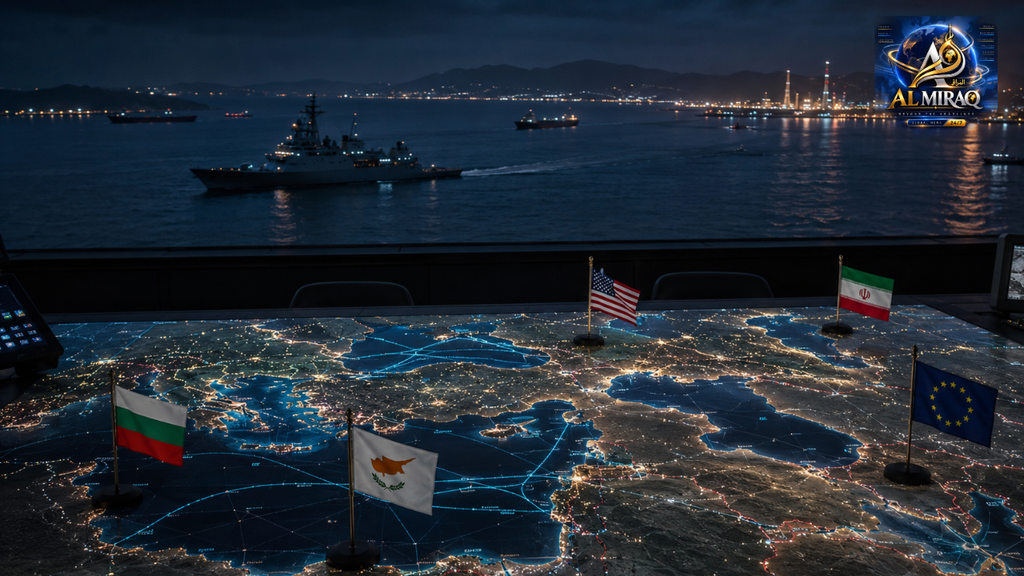
Countries such as Bulgaria and Cyprus occupy strategically important positions in southeastern Europe and the eastern Mediterranean. Their geographic location makes the wider region relevant to European maritime security and energy planning.
However, there is an important distinction between geographic relevance and direct participation.
There is no basis in the supplied developments to claim that Bulgaria or Cyprus are directly participating in the US-Iran confrontation. Their relevance is better understood in the broader context of European security, maritime routes and regional contingency planning.
Any expansion of the conflict could nevertheless force European governments to reconsider risks involving shipping, energy supplies and military readiness.
Economic Pressure Could Affect Global Markets
The immediate impact of stronger US Iran sanctions is likely to be felt most strongly through oil and financial markets.
Markets respond not only to actual supply disruptions but also to expectations.
If traders believe Iranian oil exports could decline further, prices may rise even before the full effect of sanctions becomes clear.
The opposite is also possible. If markets conclude that the sanctions will be difficult to enforce or that major buyers will continue purchasing Iranian crude, the price impact could be more limited.
This uncertainty is one of the major challenges facing policymakers.
Bessent has argued that the American strategy is designed to reduce pressure on energy markets over time, but recent developments have already generated concern about the direction of oil prices. Reuters reported that oil prices rose after Washington announced the latest escalation.
Could Secondary Sanctions Become the Next Flashpoint?
Secondary sanctions could become one of the most controversial elements of Washington’s strategy.
Unlike traditional sanctions directed at Iranian entities, secondary sanctions can target foreign companies or financial institutions that continue doing business with sanctioned Iranian entities.
That approach can significantly increase the reach of American financial policy because companies around the world often rely on access to US financial markets.
But it can also create diplomatic friction.
If Chinese, European or other foreign companies are penalized for conducting lawful commercial activities with Iran under their domestic legal systems, their governments may challenge Washington’s position.
The resulting disputes could further fragment the global economic system.
Sanctions Have a Complicated Record
The history of sanctions against Iran demonstrates both their power and their limitations.
American sanctions have contributed to serious economic difficulties in Iran, particularly by restricting access to international banking systems and limiting oil revenues.
Yet sanctions have not consistently produced the political outcomes Washington has sought.
Iran has developed mechanisms for continuing trade under pressure, including alternative financial arrangements, regional trade relationships and networks designed to circumvent restrictions.
That does not mean new sanctions will have no effect.
Rather, the outcome is likely to depend on how broadly they are enforced and whether major trading partners cooperate.
China’s position will therefore be particularly important.
Military and Diplomatic Pressure Are Now Closely Linked
The economic confrontation cannot be separated from the wider security crisis.
The United States and Iran remain locked in hostile rhetoric, while Washington is attempting to increase economic pressure and Tehran continues to reject American demands. Reuters reported on August 22 that both sides were maintaining an aggressive public posture ahead of the expected announcement of new sanctions.
The danger is that economic pressure can become a trigger for further military escalation rather than an alternative to it.
If Tehran interprets sanctions as an existential threat, Iranian leaders could respond through diplomatic, economic or military channels.
Similarly, if Washington concludes that sanctions are not producing the desired results, pressure could increase further.
That creates a potential cycle of escalation.
What Happens Next?
The next major development is expected to be Washington’s detailed announcement of the new sanctions package.
Bessent is scheduled to address the issue publicly on Monday, according to Reuters.
Several questions will be important.
First, which Iranian sectors and companies will be targeted?
Second, will the United States impose penalties on foreign companies that continue trading with Iran?
Third, how will China respond?
Fourth, will European governments support the American measures or seek exemptions to protect their own economic interests?
Finally, will the sanctions create an opening for negotiations or deepen the confrontation?
The answers could determine whether the current crisis moves toward negotiation, prolonged economic warfare or another phase of military escalation.
The Wider Implications for Europe and the Global Economy
The latest confrontation demonstrates how quickly a regional conflict can produce global consequences.
Higher energy prices can affect consumers thousands of miles from the Middle East. Disrupted shipping routes can increase insurance and transportation costs. Sanctions can divide major economies into competing trade and financial blocs.
Conclusion
The latest US Iran sanctions push marks a significant escalation in Washington’s economic campaign against Tehran.
The stakes extend well beyond the two countries.
Oil markets, international trade, European security and US-China relations could all be affected if the confrontation continues to intensify. The situation is particularly sensitive because economic measures are unfolding alongside a broader military and geopolitical crisis.
For now, the effectiveness of the new sanctions remains uncertain. History shows that economic pressure can weaken an adversary’s financial capacity, but it does not guarantee political capitulation.
Al Miraq — Beyond the Headlines.