
By Al Miraq News Desk
Published: August 28, 2026
Iran-US tensions are entering a more complicated phase as Washington increases economic pressure on Tehran, Iran maintains its demands over the Strait of Hormuz, and Pakistan attempts to keep diplomatic channels open between the two sides.
The latest developments have also pushed the crisis closer to Europe. Reports that Iranian military planners have assessed possible targets involving U.S. assets in Bulgaria and Cyprus have raised concern in southeastern Europe, although neither report establishes that an attack is imminent or that a final decision to strike has been made.
At the same time, Pakistan has sought to use its relationships with both Washington and Tehran to encourage a diplomatic solution. Field Marshal Asim Munir’s visit to Tehran on August 24 was part of Islamabad’s efforts to promote peace and security and address the continuing dispute surrounding the Strait of Hormuz. Pakistan’s Foreign Office has specifically rejected claims that Munir travelled to Iran as a U.S. envoy.
The diplomatic push comes as the Trump administration has launched Operation Economic Outcast, a major campaign designed to intensify financial pressure on Iran and restrict its remaining economic connections with the outside world. The U.S. Treasury says the campaign is intended to cut off revenue streams supporting the Iranian government and its security apparatus.
The combination of economic pressure, the unresolved Hormuz dispute and concerns about possible spillover into Europe has created a broader security challenge extending well beyond the Middle East.
Pakistan Tries to Keep Iran-US Diplomacy Alive
Pakistan has increasingly positioned itself as a potential diplomatic intermediary in the Iran-US confrontation.
Field Marshal Asim Munir travelled to Tehran on August 24 and held meetings with senior Iranian political and security officials. The visit followed Pakistan’s stated efforts to promote peace, regional stability and a possible resolution to the dispute over the Strait of Hormuz.
Pakistan’s Foreign Office later rejected claims that Munir was acting as a representative of President Donald Trump or Washington. Foreign Office spokesperson Tahir Andrabi described such claims as misleading and factually incorrect, saying the visit was conducted within the framework of Pakistan’s own diplomatic efforts.
The visit was significant because Munir met senior figures across Iran’s political and security establishment. Al Jazeera reported that discussions included the reopening of the Strait of Hormuz and the broader effort to end the conflict. Pakistani officials described the discussions as positive, while the precise substance of any possible agreement remained unclear.
Iran has also communicated conditions surrounding the Strait to Pakistan. An Iranian source cited by Tasnim said Tehran wanted the United States to return to the terms of an earlier Islamabad memorandum, including provisions concerning arrangements for Hormuz. That information represents an Iranian position rather than an agreed settlement.
This distinction is important. Diplomatic contacts do not necessarily mean that negotiations have resumed or that a deal is close.
Strait of Hormuz Remains at the Center of the Crisis
The Strait of Hormuz remains one of the most strategically important waterways in the world.
The narrow maritime passage connects the Persian Gulf with the Gulf of Oman and the wider Arabian Sea. Any prolonged disruption can have consequences for energy markets, shipping, insurance costs and global trade.
For Iran, the waterway has become a major source of leverage in its confrontation with Washington. For the United States and its partners, maintaining freedom of navigation through the region remains a critical strategic objective.
The two sides currently appear far apart.
Iran has linked the reopening of the waterway to broader political and security conditions, while Washington has intensified economic pressure instead of immediately returning to a conventional diplomatic framework.
Reports have also indicated that Iran and Oman have discussed arrangements concerning maritime passage through the strait. Iranian officials have described possible mechanisms involving Iranian and Omani waters, but the details and international acceptance of such an arrangement remain uncertain.
The United States has not accepted every Iranian interpretation of the situation, making the implementation of any maritime agreement highly complicated.
Why Hormuz Matters to Europe
The Strait of Hormuz is geographically distant from most European countries, but its economic importance makes the crisis directly relevant to Europe.
European economies remain exposed to energy prices, shipping costs and disruptions in international supply chains. A prolonged confrontation could increase the cost of oil and transportation while placing additional pressure on industries already dealing with geopolitical uncertainty.
The crisis could therefore become a European economic problem even if no European country becomes a direct participant in military operations.
US Launches Operation Economic Outcast
Washington’s strategy has increasingly shifted toward economic pressure.
On August 24, the U.S. Treasury announced Operation Economic Outcast, describing it as a broad campaign against Iran and entities that continue to support its economic networks.
Treasury Secretary Scott Bessent said the campaign would target Iran’s financial connections around the world. The initiative includes sanctions and enforcement measures aimed at revenue-generating sectors and organizations associated with Tehran.
The White House has framed the campaign as part of a wider effort to isolate Iran economically after U.S. military action weakened Iranian military and nuclear capabilities. Those descriptions are official U.S. government assessments and should not be treated as independently established facts.
Reuters reported that the administration was also warning countries that maintain economic relationships with Iran that they could face secondary sanctions. That creates a difficult choice for countries that have important commercial ties with Tehran but also depend on access to the U.S.-dominated financial system.
The economic campaign could therefore have consequences well beyond Iran.
Iran-US Tensions Reach Southeastern Europe
One of the most sensitive developments involves reports concerning possible Iranian military responses against U.S. assets outside the Middle East.
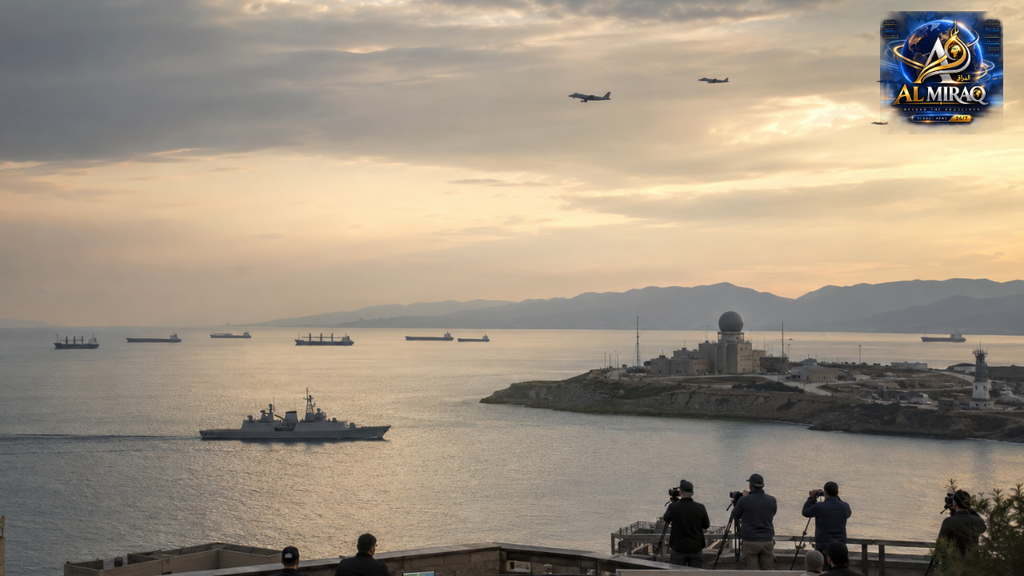
The Financial Times reported that Iranian forces had assessed possible strikes against U.S. military assets in southeastern Europe if Washington significantly escalated military action against Tehran. Bulgaria was identified because of the temporary use of its Bezmer air base by U.S. aerial-refuelling aircraft. Cyprus was also reportedly mentioned in connection with possible retaliation.
The reports do not establish that Iran has decided to attack Bulgaria or Cyprus.
That distinction has been emphasized by officials in both countries.
Bulgaria’s Defence Minister Dimitar Stoyanov said on August 19 that there was no direct national-security threat to the country based on intelligence available to the government. Bulgarian officials also stressed that the U.S. aircraft operating from Bezmer were being used within the framework of planned activities rather than as evidence of an imminent Iranian attack.
Cypriot officials similarly pushed back against suggestions that the island itself was an Iranian target.
Government sources in Nicosia said Cyprus was not a target and emphasized that diplomatic communication with Tehran remained open. Iranian diplomatic sources subsequently indicated that Cyprus would not face a threat provided British bases on the island were not used for operations against Iran.
Why Bulgaria Has Become Important
Bulgaria’s role is linked primarily to its geographic position and NATO commitments.
Sofia approved the temporary deployment of U.S. KC-135 aerial-refuelling aircraft and American personnel at Bezmer Air Base. The arrangement was intended to support U.S. operations in the broader Middle East conflict.
That decision has placed Bulgaria in a delicate position.
On one side, Sofia is a NATO member with security commitments to its allies. On the other, Bulgarian authorities have sought to prevent the country from becoming directly involved in the Iran conflict.
Iranian officials have criticized the presence of U.S. military aircraft in Bulgaria, arguing that facilities used to support American operations could contribute to military action against Tehran. Reuters reported that Iranian Foreign Minister Abbas Araghchi raised the issue with his Bulgarian counterpart during a July 30 phone call.
Bulgaria has maintained that the aircraft were not being used to conduct offensive operations against Iran.
The disagreement demonstrates how a conflict concentrated in the Middle East can create difficult security calculations for NATO members far from the battlefield.
Cyprus Faces a Different Security Dilemma
Cyprus occupies an especially sensitive position because of its geography and the presence of British Sovereign Base Areas.
RAF Akrotiri, on the island, has long been strategically important to British military operations in the Mediterranean and Middle East.
The Financial Times report that Iranian planners had considered possible retaliation involving Cyprus therefore generated immediate concern.
British authorities responded by stressing that RAF Akrotiri has robust, multilayered security measures. Cyprus itself, however, has sought to distance the island from the conflict and maintain communication with Tehran.
The situation illustrates a broader problem for European governments: military facilities can have strategic importance without the host country necessarily wanting to become a participant in a wider conflict.
For Cyprus, maintaining its diplomatic relationship with Iran while hosting British military infrastructure creates a particularly complicated balancing act.
Implications for NATO and European Security
The possibility of conflict-related threats against U.S. or British military assets in Europe would have broader implications for NATO.
Even unconfirmed reports of possible targeting can lead governments to increase security around military bases, review air-defence arrangements and reassess the risks associated with supporting allied operations.
For NATO, the issue is not simply whether Iran would deliberately attack a European country. The larger concern is whether the geographical boundaries of the conflict could gradually expand.
Bulgaria’s location on the Black Sea gives it additional strategic importance, while Cyprus occupies a critical position in the eastern Mediterranean.
The European security environment is already under pressure from the war in Ukraine, tensions involving Russia and growing competition between major powers. A sustained Iran-US confrontation adds another layer of complexity.
European governments therefore face the challenge of supporting transatlantic security arrangements while attempting to prevent their territory from becoming a direct extension of Middle Eastern military operations.
The Risk of a Wider Regional Crisis
The most significant danger is escalation through a series of interconnected decisions.
A military confrontation involving the United States and Iran could affect shipping. Shipping disruption could increase energy prices. Economic pressure could lead Iran to seek alternative methods of generating revenue. Increased pressure could then produce additional military or asymmetric responses.
At the same time, countries such as Pakistan, Oman and Qatar are attempting to preserve diplomatic channels.
Pakistan’s role is particularly notable because Islamabad has strategic relationships with both Iran and the United States. It also has direct geographic and economic interests in regional stability.
Pakistan has repeatedly emphasized diplomacy rather than direct military involvement. Its efforts to facilitate communication could become increasingly important if Washington and Tehran remain unwilling to speak directly.
What Remains Unclear
Several important questions remain unanswered.
First, there is no clear indication that the United States and Iran have resumed formal negotiations. Reuters reported on August 27 that Washington said it was not currently engaged in talks with Tehran and was instead concentrating on economic pressure.
Second, the precise status of any potential arrangements concerning the Strait of Hormuz remains uncertain.
Third, reports about potential Iranian targets in Bulgaria and Cyprus are based on intelligence-related claims and media reporting rather than evidence of an imminent attack.
Fourth, it remains unclear whether Pakistan’s diplomatic efforts can bridge the substantial differences between Washington and Tehran.
Finally, the longer-term consequences of Operation Economic Outcast are uncertain. The campaign could increase pressure on Iran, but it could also encourage Tehran to deepen economic relationships with countries willing to continue trading with it.
A Diplomatic Opening Is Still Possible
Despite the current tensions, the existence of diplomatic activity suggests that a complete breakdown has not occurred.
Pakistan continues to advocate dialogue. Oman has remained relevant to discussions surrounding the Strait of Hormuz. Qatar has also been involved in regional diplomatic efforts.
These channels could provide opportunities for de-escalation if the United States and Iran eventually conclude that continued confrontation carries greater costs than compromise.
However, the distance between the two sides remains substantial.
Washington wants greater pressure on Iran’s military and economic capabilities, while Tehran has demanded changes to the conditions surrounding the conflict and the Strait of Hormuz.
Neither side has publicly demonstrated that it is prepared to accept the other’s core demands.
Conclusion
The latest phase of Iran-US tensions is no longer confined to the Middle East.
Iran, meanwhile, continues to seek leverage over maritime access and the broader terms of any future settlement.
Pakistan’s Foreign Office has stressed that the mission was part of Islamabad’s own diplomatic efforts rather than a U.S. assignment.
Meanwhile, reports involving Bulgaria and Cyprus demonstrate how quickly the security implications of the conflict can reach Europe. Neither country has been established as an imminent Iranian target, and officials have rejected suggestions of a direct threat. Nevertheless, the presence of U.S. and British military infrastructure gives southeastern Europe a growing connection to the crisis.
Al Miraq — Beyond the Headlines.