By Al Miraq News Desk
Published: August 28, 2026
Pakistan’s efforts to mediate between Iran and the United States have entered a potentially important phase after Field Marshal Asim Munir visited Tehran as part of Islamabad’s diplomatic push to end the conflict and restore movement through the Strait of Hormuz.
The visit has drawn particular attention because the strategic waterway has become one of the central issues in the confrontation between Washington and Tehran. Iranian officials have indicated that reopening the strait would depend on conditions that include broader regional developments, while Pakistan has emphasized diplomacy and a peaceful settlement.
Pakistan’s Foreign Office has also rejected suggestions that Munir travelled to Iran as an envoy of U.S. President Donald Trump. Islamabad says the visit was part of Pakistan’s own mediation efforts aimed at encouraging dialogue and reducing tensions.
The developments come as Washington maintains that direct negotiations with Tehran are not currently taking place, while Iran and regional mediators continue exploring possible routes back to diplomacy.
Asim Munir Iran Visit Focuses on Mediation
Munir’s trip to Tehran on August 24 came at a sensitive point in the conflict. Pakistani officials said the discussions focused on efforts to achieve a peaceful and lasting settlement and address the issue of maritime traffic through the Strait of Hormuz.
Multiple reports indicated that reopening the strategic waterway was among the key subjects discussed during the visit. Pakistani sources described new proposals as part of an effort to revive stalled contacts between Washington and Tehran.
The Pakistani military chief held meetings with senior Iranian figures, including President Masoud Pezeshkian, parliament speaker Mohammad Bagher Ghalibaf and officials connected to Iran’s national security establishment.
Pakistan has increasingly positioned itself as a mediator in the crisis, maintaining contacts with both sides while attempting to prevent another escalation.
The significance of Munir’s role also reflects the unusually broad nature of the current crisis. The conflict is no longer confined to military confrontation. Energy markets, shipping, sanctions, regional security and international diplomacy are all closely connected to the future of U.S.-Iran relations.
Pakistan Rejects Claims That Munir Was Trump’s Envoy
Following the Tehran visit, Pakistan’s Foreign Office moved to clarify the nature of Munir’s mission.
Foreign Office spokesperson Tahir Andrabi rejected claims that the field marshal had travelled to Iran as a representative of Trump or the United States. Islamabad said the visit was part of Pakistan’s continuing diplomatic role between Washington and Tehran.
That distinction is important because the United States and Iran remain deeply divided over the terms of any possible settlement.
Pakistan can communicate with both parties without formally representing either side. This gives Islamabad a potentially useful diplomatic channel, but it also limits what Pakistan can guarantee.
Ultimately, any agreement on the conflict would have to be accepted by Washington and Tehran themselves.
Iran Prepares Conditions for Reopening the Strait of Hormuz
One of the most significant developments following the diplomatic efforts came from Iran’s Supreme National Security Council secretary, Mohsen Rezaei.
Rezaei said Iran was preparing a list of conditions for reopening the Strait of Hormuz. He also said that ending the regional war would be among those conditions.
According to Reuters, Rezaei said Iran and Oman had agreed on a shipping corridor through the strait, with portions of the route passing through Omani and Iranian waters. He said ships could use a designated central channel if the United States accepted Iran’s conditions.
However, the precise details of the proposed arrangement remain unclear.
A separate senior source indicated that Iran and Oman were still working on the details of the waterway arrangement. Iranian Revolutionary Guard officials have also linked reopening the strait to demands involving sanctions, compensation and what Tehran describes as restrictions on its ports.
This means that an announcement about a possible shipping corridor should not yet be interpreted as a full reopening of the waterway.
The difference is critical for global markets. A corridor that operates under special conditions would represent a very different situation from the complete restoration of normal commercial shipping.
Why the Strait of Hormuz Matters
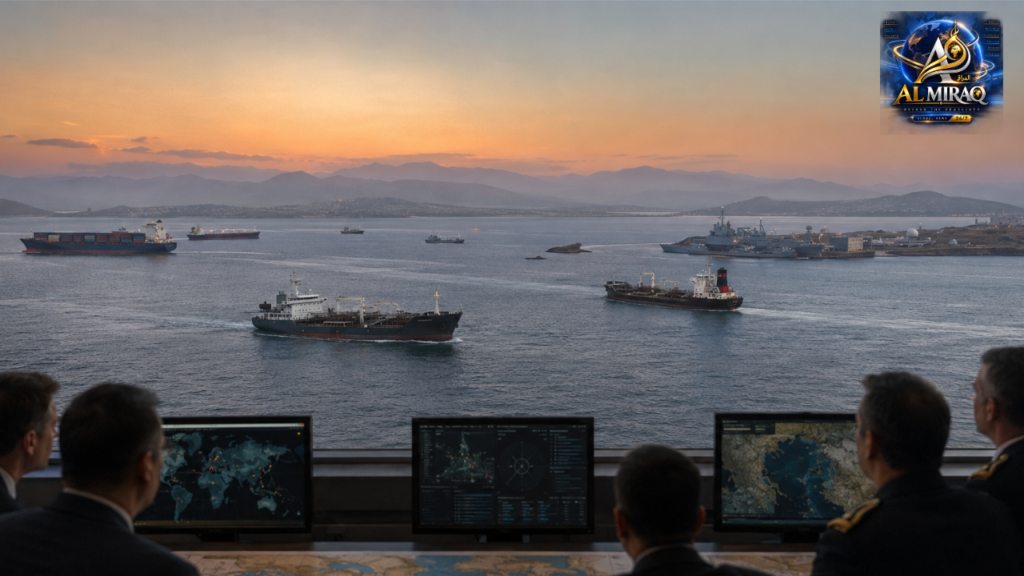
The Strait of Hormuz is among the world’s most strategically important maritime passages.
The narrow waterway connects the Persian Gulf with the Gulf of Oman and the Arabian Sea. Before the current conflict, it carried roughly one-fifth of global oil and liquefied natural gas shipments, making any prolonged disruption a major international economic concern.
A sustained reduction in shipping through Hormuz can affect:
- Global oil prices
- Liquefied natural gas supplies
- Shipping insurance costs
- Energy security in Europe and Asia
- Inflation
- Maritime security
- International trade routes
For countries heavily dependent on imported energy, the issue goes far beyond the Persian Gulf.
Europe is particularly sensitive to disruptions in global energy markets because energy prices and supply security directly influence households, industry and national economies.
Europe Faces Wider Security and Energy Risks
The continuing crisis also has implications for European security.
European governments are watching the situation not only because of energy prices but also because prolonged instability in the Middle East can affect maritime security, migration pressures, defense planning and relations with the United States.
Countries located around the Mediterranean, including Cyprus, have particular geographic relevance to wider maritime-security planning. Bulgaria, although located on the Black Sea rather than the Mediterranean, is also part of the broader European security architecture through its NATO and European Union membership.
Neither Bulgaria nor Cyprus should, however, be portrayed as directly involved in the current U.S.-Iran diplomatic dispute unless officials announce such involvement.
The broader concern is that a prolonged conflict could place additional pressure on European governments already dealing with energy-security and defense challenges.
The latest Asim Munir Iran visit has highlighted Pakistan’s increasingly important role in efforts to bridge the gap between Iran and the United States.
Washington Says No Direct Talks Are Underway
While Pakistan and other regional actors continue diplomatic efforts, Washington has taken a harder public position.
White House Press Secretary Karoline Leavitt said the United States and Iran were not currently engaged in negotiations. The administration has indicated that this position would remain until Trump believes Tehran is prepared for what Washington considers meaningful negotiations.
Trump has also maintained that the United States retains multiple options as pressure on Iran increases.
The administration has increasingly emphasized economic pressure rather than relying solely on military action. The campaign described as “Operation Economic Outcast” is intended to increase pressure on Iran’s economic networks and reduce the financial resources available to Tehran.
The combination of economic pressure and stalled diplomacy creates a difficult environment for mediators.
Pakistan can encourage communication, but it cannot remove the fundamental disagreements separating Iran and the United States.
The latest Asim Munir Iran visit has highlighted Pakistan’s increasingly important role in efforts to bridge the gap between Iran and the United States.
Iran Rejects Allegations Involving Trump’s Son
The Iranian security establishment has also pushed back against allegations involving a purported Iranian plot against one of Trump’s sons.
Rezaei described such allegations as false in comments reported by international media. The denial comes amid an increasingly hostile information environment surrounding the conflict.
Claims involving alleged assassination plots, intelligence operations or covert activities require particular caution because they can be difficult to independently verify during an active conflict.
Neither allegations nor denials should automatically be treated as independently established facts without supporting evidence.
Pakistan’s Diplomatic Role Is Becoming More Important
Pakistan’s involvement reflects its geographic and political position in the region.
Islamabad maintains relations with Iran while also having longstanding strategic ties with the United States. That places Pakistan in a position where it can communicate with both sides, although it must carefully balance those relationships.
Pakistani officials have described their objective as helping establish peace and security in the region rather than acting as a formal representative of Washington or Tehran.
The effort also fits into a broader regional mediation process involving countries such as Oman and Qatar.
Qatar’s prime minister travelled to Tehran as part of renewed mediation efforts, while Oman has remained particularly important because of its geography and longstanding diplomatic role in U.S.-Iran contacts.
The involvement of multiple mediators indicates that there is still diplomatic activity around the conflict even though Washington says formal U.S.-Iran negotiations are not currently underway.
The latest Asim Munir Iran visit has highlighted Pakistan’s increasingly important role in efforts to bridge the gap between Iran and the United States.
What Would a Hormuz Shipping Corridor Mean?
A limited shipping corridor could become an important first step toward restoring maritime trade.
If Iran, Oman and other relevant parties can establish a clearly defined route, commercial vessels could potentially receive a mechanism for navigating the strait under agreed conditions.
But several questions remain unresolved.
It is not yet clear what security guarantees would be provided to ships, how vessels would be selected, who would monitor the route or how disputes would be handled.
There is also the larger question of whether the United States would accept Iran’s conditions.
Without agreement between the major parties, any maritime arrangement could remain fragile.
For international shipping companies, predictability is essential. A route that can be disrupted again at short notice may not immediately return to normal commercial operation even if authorities declare part of the waterway open.
The latest Asim Munir Iran visit has highlighted Pakistan’s increasingly important role in efforts to bridge the gap between Iran and the United States.
The Economic Stakes Extend Beyond the Gulf
The Hormuz crisis has consequences far beyond countries bordering the Persian Gulf.
Energy-importing economies in Europe and Asia could face higher costs if oil and gas supplies remain constrained. Shipping companies may also face increased insurance premiums and longer routes if vessels avoid high-risk waters.
Higher transportation and energy costs can eventually affect consumer prices, industrial production and government budgets.
For Europe, the crisis adds another layer to an already complicated energy-security environment.
For Asian economies, particularly those dependent on Middle Eastern energy supplies, prolonged disruption could have equally significant consequences.
The economic pressure therefore creates incentives for governments to support diplomatic efforts even when their political positions on the wider conflict differ.
Military Pressure and Diplomacy Remain Closely Linked
The central challenge is that diplomacy is taking place while military and economic pressure continue.
Washington has kept the possibility of further military action open, while Tehran continues to insist on conditions that the United States may consider unacceptable.
This creates a narrow space for mediators.
Pakistan’s efforts could help reopen communication channels, but a durable settlement would require decisions on much larger questions, including security guarantees, sanctions, regional military activity and freedom of navigation.
The Strait of Hormuz is therefore both a practical maritime issue and a negotiating instrument.
For Iran, control over access to the waterway provides significant strategic leverage. For the United States and other countries, unrestricted maritime navigation is a major economic and security priority.
That overlap makes Hormuz one of the most difficult elements of any potential agreement.
The latest Asim Munir Iran visit has highlighted Pakistan’s increasingly important role in efforts to bridge the gap between Iran and the United States.
What Remains Unclear
Several important issues remain unresolved.
First, there is no confirmed comprehensive U.S.-Iran agreement restoring normal diplomatic relations or permanently ending the conflict.
Second, Iranian officials have discussed conditions for reopening Hormuz, but a final operational arrangement has not been publicly established.
Third, Pakistan’s mediation efforts have generated diplomatic movement, but there is no guarantee that they will produce a formal agreement.
Fourth, Washington continues to say that direct negotiations are not currently underway, despite ongoing mediation by regional actors.
Finally, the wider military situation remains fluid.
These uncertainties make it difficult to predict whether the current diplomatic activity will lead to a lasting ceasefire, a temporary maritime arrangement or another escalation.
The latest Asim Munir Iran visit has highlighted Pakistan’s increasingly important role in efforts to bridge the gap between Iran and the United States.
What the Latest Developments Could Mean for the Region
The immediate priority for regional governments is preventing further escalation.
A reopening of the Strait of Hormuz, even on a limited basis, could provide an important economic and diplomatic signal. It could reduce pressure on global energy markets and create a practical incentive for the parties to maintain communication.
However, a corridor alone would not resolve the broader U.S.-Iran conflict.
The underlying disputes remain substantial, and disagreements over sanctions, security guarantees, military operations and regional influence could continue even if shipping resumes.
Conclusion
The latest Asim Munir Iran visit has highlighted Pakistan’s increasingly important role in efforts to bridge the gap between Iran and the United States.
The visit did not produce a publicly confirmed final peace agreement, but it contributed to a broader diplomatic effort focused on ending the conflict and finding a pathway toward reopening the Strait of Hormuz. Iranian officials have now outlined conditions for reopening the strategic waterway, while Washington says direct negotiations with Tehran are not currently taking place.
The proposed maritime corridor involving Iran and Oman could eventually help restore commercial shipping, but its details and implementation remain uncertain.
The stakes extend well beyond the Middle East. Any prolonged disruption in Hormuz could affect global energy markets, international shipping and European economic security. Conversely, a stable reopening could provide an important opportunity for de-escalation.
For now, Pakistan’s mediation, Iran’s conditions and Washington’s continued economic pressure represent competing elements of a diplomatic puzzle with consequences for regional and international security.
The next decisive step will depend not on any single mediator, but on whether Tehran and Washington are ultimately willing to translate indirect diplomatic contacts into substantive negotiations.
Al Miraq — Beyond the Headlines.