
By Al Miraq News Desk
Published: August 22, 2026
The US-Iran war is entering a new and increasingly difficult phase for Washington, with reported American military casualties, rising financial costs, pressure on weapons stockpiles and extended deployments placing additional strain on the US military.
According to figures cited from the US Defense Department’s casualty tracking system, the number of American service members wounded during the conflict has risen above 750. The reported figures have intensified scrutiny of the military campaign at a time when diplomatic discussions between Washington and Tehran remain deadlocked.
The latest developments have also triggered questions about the scale of America’s military commitment, the condition of its forces across the Gulf region and whether the United States can maintain a prolonged conflict while preserving its readiness for potential challenges elsewhere.
For AlMiraq, the development represents one of the most significant stories surrounding the ongoing confrontation between the United States and Iran, particularly because the consequences extend beyond battlefield casualties.
The conflict is now affecting personnel, military equipment, ammunition supplies, bases and America’s broader strategic calculations.
Pentagon Casualty Figures Show More Than 750 Americans Wounded
The latest casualty figures cited in the report indicate that 18 US service members have been killed and another 757 wounded since the United States launched military operations against Iran on February 28.
The figures are reportedly based on combined information from the Defense Casualty Analysis System, commonly known as DCAS, covering overseas operations and Operation Epic Fury.
The addition of more than 50 wounded personnel to the database has brought renewed attention to the human cost of the conflict.
The Defense Casualty Analysis System is used by the US Department of Defense to record military casualties, including service members killed, wounded and, where applicable, missing.
Because casualty databases can be updated as information is reviewed and verified, figures may change over time. That has become particularly important during the current conflict because previous changes to reported totals have already generated questions.
The latest numbers therefore provide an important indication of the military burden facing Washington, although they do not necessarily represent the complete human cost of the war.
Why the New DCAS Category Is Significant
Another development attracting attention is the creation of a new overseas operations category in the Pentagon’s casualty database.
According to the information provided in the report, the category was introduced last month and includes casualties dating back to July 7.
The Defense Department has not publicly explained in detail which specific conflict or operation all of those casualties relate to.
The date, however, has drawn attention because July 7 was reportedly the same day the Trump administration informed Congress that a new conflict with Iran had begun through a War Powers Act notification.
Under the War Powers Resolution, the president generally has obligations to notify Congress after introducing US armed forces into hostilities.
The appearance of casualties connected to the new category has consequently fueled questions about the timeline and scope of US military involvement.
For observers attempting to understand the real scale of the US-Iran war, the classification and timing of casualty reports are becoming increasingly important.
Previous Changes to US Casualty Numbers Raise Questions
The Pentagon’s casualty reporting system has already faced scrutiny during the conflict.
According to the supplied report, four deaths and dozens of injuries temporarily disappeared from the DCAS totals last month before later being restored.
The Defense Department reportedly attributed the change to temporary data disruptions.
Such corrections can occur in military databases as information is reviewed, reconciled or transferred between systems. However, during an active war, changes in casualty totals can attract considerable public attention.
The issue is particularly sensitive because casualty figures influence public understanding of the cost of military operations.
Every additional death or injury represents not only a statistical entry but also a service member, family and military unit affected by the conflict.
The latest update has therefore placed the Pentagon’s casualty reporting system back under the spotlight.
Iran Has Made Much Higher Casualty Claims
While US official figures indicate 18 American military deaths and 757 wounded, Iranian officials and state-linked media have made substantially higher claims.
According to the material provided for this report, Iranian military adviser Mosen Razi claimed on August 9 that nearly 500 US soldiers had been killed by Iranian strikes during July, with hundreds more reportedly wounded.
Iranian state-linked media have also reportedly claimed that the United States acknowledged approximately 650 casualties.
Earlier in March, Iranian security official Ali Larijani was reported to have claimed that more than 500 American soldiers had been killed during the first days of the conflict.
These figures are not independently verified and differ dramatically from the casualty figures attributed to US Defense Department records.
That distinction is important.
During wartime, governments and state-linked media may release casualty figures that serve political or strategic objectives. Independent verification can be difficult, particularly when access to military bases and operational areas is restricted.
As a result, the official US casualty database remains a more appropriate reference for confirmed US military losses, while Iranian figures should be treated as claims until independently corroborated.
The War Is Also Becoming a Financial Burden
The human cost is only one part of the growing pressure on Washington.
The conflict is also consuming significant financial resources.
According to the supplied report, US Defense Secretary Pete Hegseth has said that the Iran war has already cost approximately $37.5 billion.
If the conflict continues for an extended period, the financial burden could increase significantly.
Military operations involving aircraft, naval vessels, air defense systems, precision-guided weapons, intelligence assets, logistics and personnel require enormous resources.
The cost is not limited to weapons fired during combat.
The United States may also have to spend billions repairing damaged military infrastructure, replacing destroyed equipment, replenishing ammunition stocks and maintaining forces deployed throughout the region.
That creates a difficult strategic calculation for Washington.
The longer the war continues, the more expensive it becomes to sustain.
US Military Bases Face a Difficult Future
Iranian missile and drone attacks have reportedly damaged American military facilities in the Gulf.
This has raised questions about whether Washington will rebuild, reinforce or reposition some of its military infrastructure in the region.
A prolonged conflict could force the Pentagon to reconsider the location and size of its military footprint.
Rebuilding damaged facilities would require substantial investment. Keeping large numbers of troops and weapons systems in vulnerable locations could also increase the risk of further attacks.
On the other hand, withdrawing too many forces could create concerns about deterrence and regional security.
The United States therefore faces a difficult balancing act.
Washington must determine how much military power is necessary to maintain pressure on Iran while avoiding an unnecessarily expensive and vulnerable deployment.
Ammunition Stocks Are Coming Under Pressure
One of the most significant long-term concerns is ammunition.
Modern warfare consumes enormous quantities of missiles, interceptors and precision-guided weapons.
The US-Iran war has reportedly required extensive use of American air-defense interceptors and precision munitions.
That could place additional pressure on US stockpiles that were already being closely monitored because of America’s commitments in other parts of the world.
According to the report, an assessment by the Center for Strategic and International Studies indicated that US inventories of Patriot interceptors had fallen below 1,000, while THAAD interceptor inventories were estimated at approximately 250.
The exact stockpile situation can change as new weapons are manufactured, delivered or moved between theaters.
Nevertheless, the broader concern is clear: a prolonged high-intensity conflict can rapidly consume expensive munitions faster than defense companies can replace them.
Pentagon Pushes Defense Companies to Increase Production
The pressure on weapons stocks has reportedly prompted the Pentagon to push American defense companies to accelerate production and deliveries.
That effort could become one of the most important elements of America’s long-term war strategy.
Increasing production is not as simple as turning on additional factory lines.
Modern missiles and interceptors depend on specialized components, complex supply chains, highly trained workers and lengthy testing and certification processes.
Some systems may take months or even years to manufacture in large quantities.
If the war continues to consume weapons faster than factories can replace them, Washington could face difficult choices about how to distribute limited stocks.
That issue becomes particularly important because the United States has global military commitments.
Could the Iran War Affect US Readiness in the Indo-Pacific?
The conflict is not occurring in isolation.
The United States maintains strategic commitments in Europe, the Middle East and the Indo-Pacific.
A major war with Iran could therefore force American military planners to reconsider how resources are distributed between theaters.
Air-defense interceptors, precision weapons, naval assets, aircraft and personnel used in the Middle East are resources that cannot always be immediately available elsewhere.
This raises a major strategic question:
Can the United States sustain a prolonged war against Iran while remaining prepared for another major crisis?
The answer could influence American foreign and defense policy well beyond the Middle East.
Washington’s military planners must consider not only the current battlefield but also potential future threats.
USS Abraham Lincoln Deployment Highlights Personnel Strain
The pressure on American forces is also visible among military personnel.
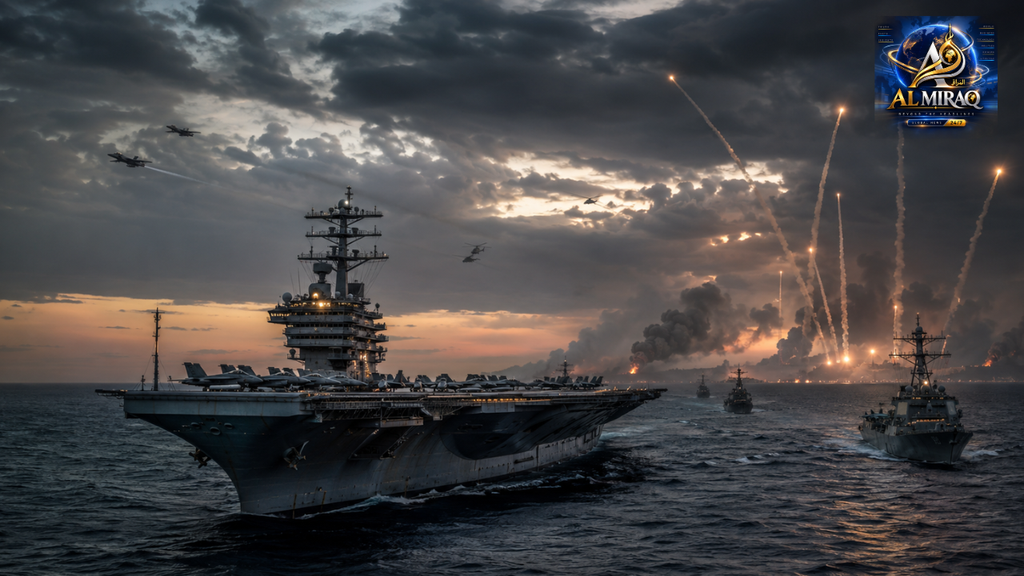
The USS Abraham Lincoln, a US Navy aircraft carrier, has reportedly been deployed for an extended period, carrying nearly 5,000 sailors and Marines.
According to reports cited in the supplied material, the carrier’s deployment has lasted almost nine months, with more than 200 days reportedly passing without a port call.
Long deployments can create significant physical and psychological pressure.
Service members may face fatigue, limited personal space, disrupted family relationships, demanding operational schedules and uncertainty about when they will return home.
Reports from sailors, military families and media organizations have raised concerns about fatigue, living conditions, supplies and mental health.
The Pentagon has disputed some of these reports.
Defense Secretary Hegseth has reportedly described portrayals of conditions aboard the carrier as significantly misrepresented.
Nevertheless, the length of the deployment itself demonstrates how demanding the current operational environment has become.
USS George Washington Could Relieve Abraham Lincoln
The US Navy is reportedly preparing the USS George Washington to relieve the Abraham Lincoln.
Such a rotation would demonstrate an effort to manage the strain created by extended deployments.
Aircraft carriers are among the most valuable and complex military assets in the world, but they also require maintenance, crew rest and logistical support.
Keeping a carrier deployed for prolonged periods can affect both the crew and the vessel itself.
Replacing the Abraham Lincoln would therefore allow the Navy to maintain its presence while providing an opportunity to reduce the pressure on personnel who have already spent months at sea.
The situation illustrates a broader challenge facing Washington: military power depends not only on weapons but also on the people required to operate them.
The Human Cost Could Become a Bigger Political Issue
As casualty figures increase, the political implications of the war may also become more significant.
American families are likely to pay close attention to official casualty reports, particularly if the conflict continues for months.
Each additional casualty can increase public scrutiny of the government’s military strategy.
Questions may emerge over the objectives of the war, the expected duration, the financial cost and whether diplomatic alternatives remain available.
Congress is also likely to examine the administration’s decisions regarding military deployments and the legal basis for continued hostilities.
The longer the conflict continues, the more difficult it may become for Washington to separate military strategy from domestic political considerations.
US-Iran Negotiations Remain Deadlocked
The military developments are unfolding alongside stalled diplomatic efforts.
According to the supplied report, negotiations between Tehran and Washington remain deadlocked.
This creates an increasingly difficult situation.
Military escalation can make diplomatic compromise harder because both sides may become less willing to make concessions after suffering casualties and economic losses.
At the same time, the growing costs of war can create additional incentives to seek a negotiated settlement.
For the United States, diplomacy could potentially reduce the pressure on military forces, weapons inventories and government finances.
For Iran, negotiations could provide an avenue to reduce military pressure and economic damage.
Whether either side is prepared to compromise remains one of the most important unanswered questions.
What Happens Next in the US-Iran War?
The future direction of the conflict will depend on several factors.
The first is whether Washington and Tehran can reopen meaningful negotiations.
The second is whether attacks on American military positions continue.
The third is the availability of weapons and air-defense interceptors.
The fourth is the ability of the US military to rotate personnel and maintain deployments without creating unacceptable strain.
Finally, the financial cost could become a decisive factor.
If the war continues at its current intensity, Washington could face growing pressure to demonstrate that its military objectives justify the resources being consumed.
The conflict has already produced significant consequences, but the longer-term impact could be even greater.
A War That Is Testing America’s Military Capacity
The latest US casualty figures provide only one measure of the pressure created by the conflict.
The United States is simultaneously dealing with wounded personnel, military deaths, damaged bases, expensive operations, ammunition consumption and lengthy deployments.
The Pentagon’s ability to replace weapons and maintain forces will be closely watched as the conflict continues.
The situation involving the USS Abraham Lincoln also highlights another reality: even the world’s most powerful military has finite resources.
Aircraft carriers require crews.
Missiles require factories.
Bases require protection and repairs.
Soldiers and sailors require rest and support.
And wars require enormous amounts of money.
The US-Iran war is therefore becoming more than a question of battlefield strength. It is increasingly a test of America’s ability to sustain a prolonged military campaign while preserving its wider global commitments.
For readers following the latest developments, AlMiraq will continue to monitor updates surrounding US military casualties, Pentagon decisions, Iran’s response, diplomatic negotiations and the wider geopolitical consequences of the conflict.
As new casualty figures and military assessments emerge, the most important question may no longer be simply who is winning on the battlefield.
It may be how long both sides can sustain the cost of continuing the war.
Al Miraq — Beyond the Headlines.